Formula One
Formula One is the highest class of open-wheel, single-seater formula racing worldwide, run by the Formula One Group and sanctioned by the Fédération Internationale de l'Automobile. Its World Championship has been contested annually since 1950, with races called Grands Prix held across multiple countries and continents on purpose-built circuits and street circuits alike. The word 'formula' in the name refers to the regulated set of rules every competing car must satisfy.
The FIA Formula One World Championship awards two annual titles: one for drivers and one for constructors. Every competing driver must hold the FIA's Super Licence — the highest racing licence the organisation issues — and every venue must be rated Grade One, the highest circuit classification the FIA assigns.
| Category | Open-wheel, single-seater formula racing |
| Governing body | Fédération Internationale de l'Automobile (FIA) |
| Commercial operator | Formula One Group (Liberty Media Corporation since 2017) |
| First World Championship race | 1950 British Grand Prix, Silverstone, 13 May 1950 |
| Driver licence required | FIA Super Licence |
| Circuit grade required | FIA Grade One |
| Team cost cap (2026 season) | US$215 million |
| Teams based in the United Kingdom | Six of eleven |
| Last non-championship F1 race | 1983 Race of Champions, Brands Hatch |
What is Formula One and how is it governed?
Formula One is defined by a prescribed set of technical and sporting regulations — the 'formula' — that all participant cars must meet. The FIA sanctions the championship and issues the Super Licence required of every driver, while the Formula One Group manages the commercial operation of the series. Races are held on circuits that must carry the FIA's Grade One rating, the organisation's most demanding circuit classification.
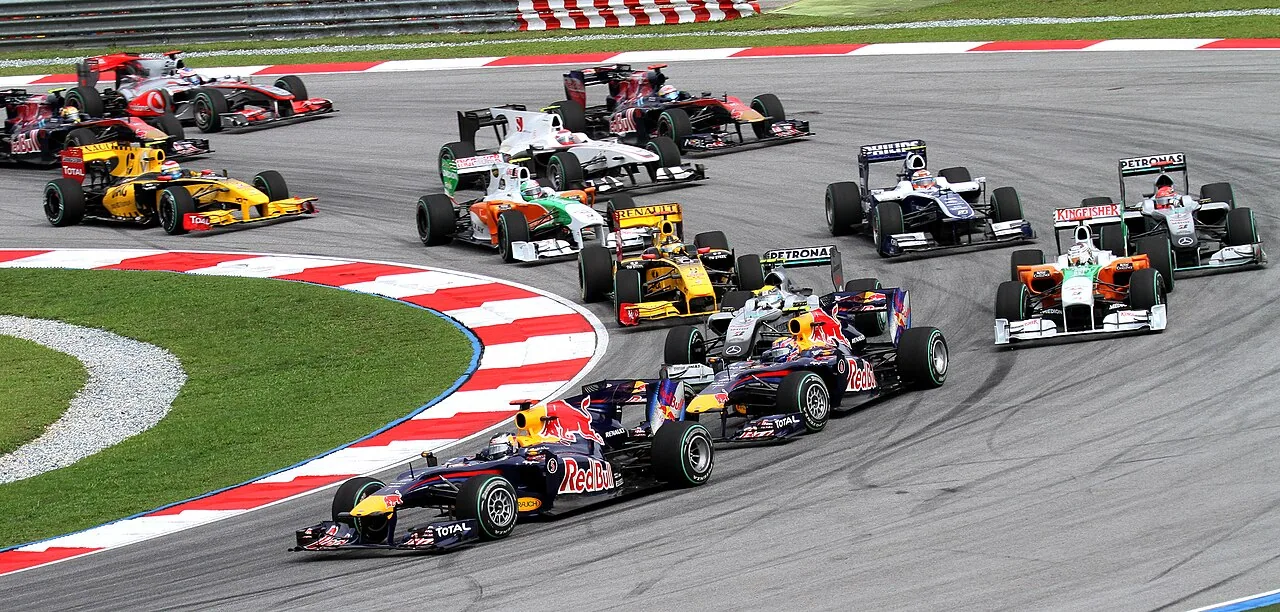
A points-scoring system applied across each season's Grands Prix determines two separate World Championships: one awarded to an individual driver and one to a constructor, a category now synonymous with the team that builds and races the car. Grands Prix are staged in multiple countries and on multiple continents, using both permanent purpose-built facilities and temporary street circuits.
Origins and early history
Formula One's lineage runs back to the World Manufacturers' Championship held between 1925 and 1927 and the European Drivers' Championship contested from 1931 to 1939. Before the Second World War, several Grand Prix organisations proposed a successor to the European Championship, but wartime suspension of racing prevented agreement. A new International Formula was not formalised until after the conflict ended.
The formula was agreed upon in 1946 and officially took effect in 1947. The 1946 Turin Grand Prix was the first race run under the new regulations, anticipating the formula's formal start. The FIA World Championship itself was instituted to begin in 1950, with the inaugural round, the British Grand Prix, held at Silverstone on 13 May of that year.
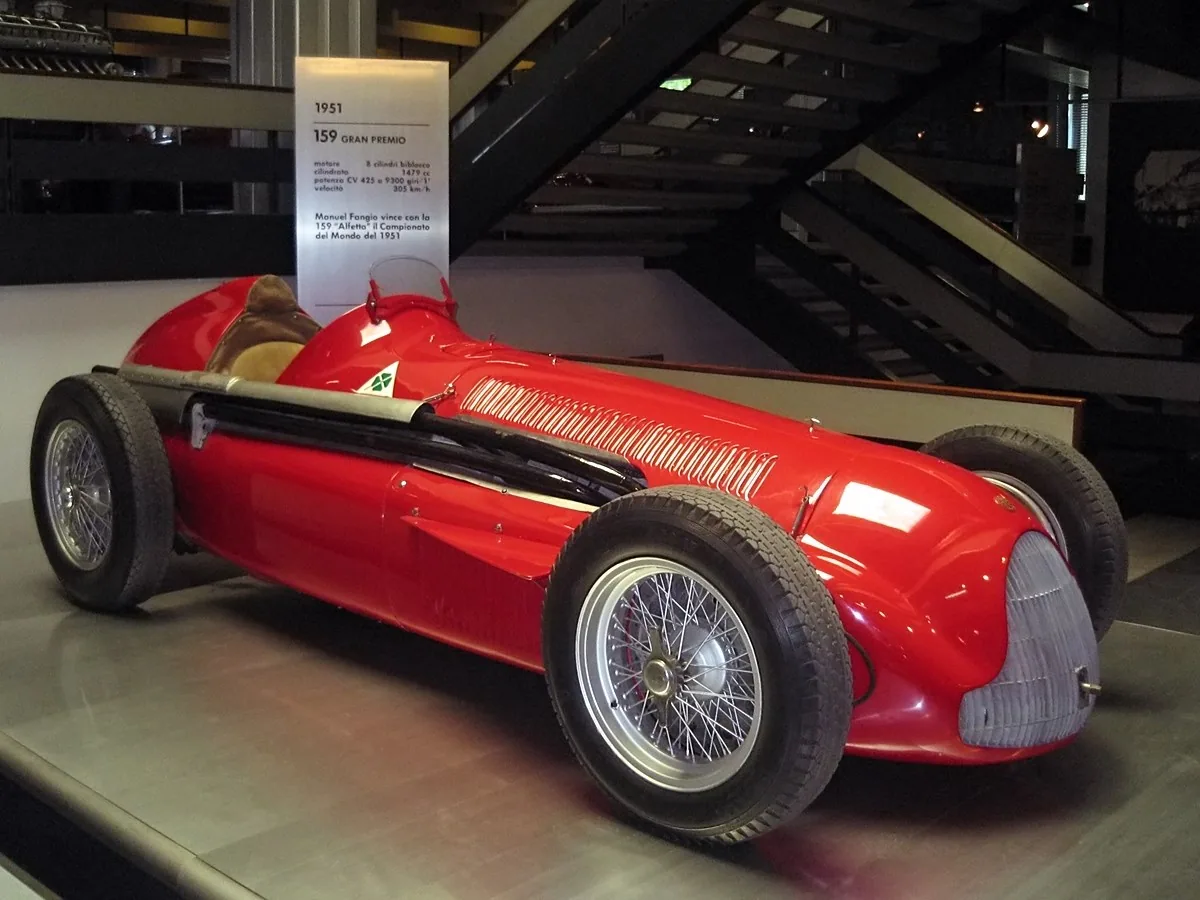
Alfa Romeo driver Giuseppe Farina won that first World Championship, narrowly defeating his teammate Juan Manuel Fangio. Fangio subsequently claimed the title in 1951, 1954, 1955, 1956, and 1957 — five championships in total — and his record of winning 24 of the 52 Grands Prix he entered remains the highest winning percentage of any driver in the history of the series. His five-title record stood for 46 years until Michael Schumacher secured a sixth championship in 2003.
Championship structure and notable milestones
A Constructors' Championship was added to the series from the 1958 season onward. Stirling Moss, widely regarded as among the finest drivers of the 1950s and 1960s, never won the Drivers' Championship; between 1955 and 1961 he finished second four times and third on the remaining three occasions.
For many years, promoters also staged non-championship races run to Formula One regulations. These events, which sometimes took place on circuits not suitable for the World Championship, featured both championship-level competitors and local drivers. South Africa ran a domestic Formula One series from 1960 to 1975 using locally built or modified machinery alongside recently retired championship cars, while a British Formula One Championship from 1978 to 1980 used second-hand cars from manufacturers including Lotus and Fittipaldi Automotive, powered by DFV engines. Rising costs gradually reduced such competitions through the 1970s, and the final non-championship Formula One race was the 1983 Race of Champions at Brands Hatch, won by reigning World Champion Keke Rosberg in a Williams-Cosworth ahead of American Danny Sullivan.
How did Formula One technology develop?
The first major technical transformation in the series was the adoption of mid-engined cars, a configuration Bugatti introduced to the formula. Jack Brabham, champion in 1959, 1960, and 1966, demonstrated the decisive performance advantage of mid-engine placement over all other configurations. By 1961, every team had converted to mid-engined cars, with the Ferguson P99 — a four-wheel-drive design — the last front-engined car to start a World Championship race when it appeared at the 1961 British Grand Prix.
In 1962, Lotus introduced a car built around an aluminium-sheet monocoque chassis, replacing the conventional space-frame construction that had been universal until that point. This was regarded as the most significant technical advance in the sport since the shift to mid-engined layouts. The monocoque offered a superior combination of stiffness and low weight and was rapidly adopted across the field.
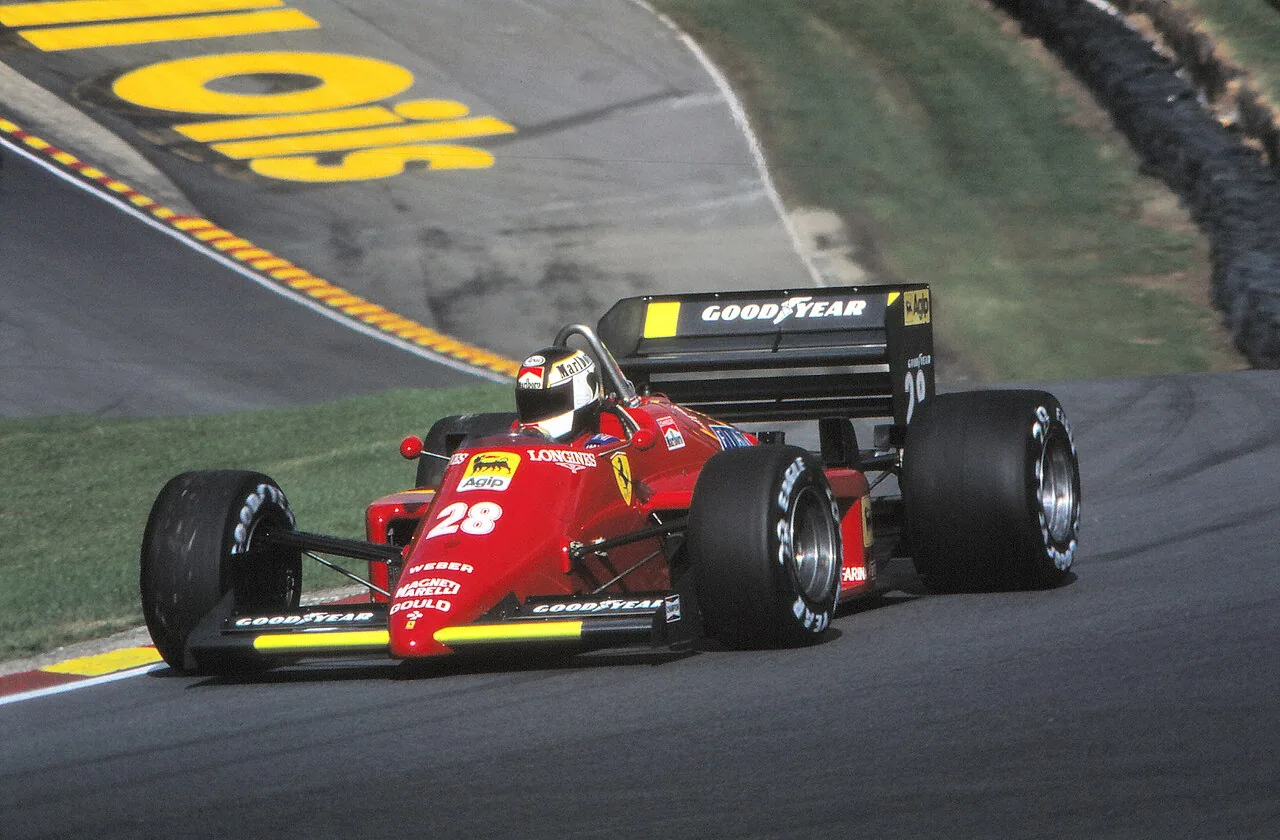
Formula One cars achieve the highest cornering speeds of any regulated road-course racing car through the generation of large aerodynamic downforce, produced primarily by front and rear wings and underbody tunnels. Performance also depends heavily on electronics, suspension geometry, and tyre management. Electronic driving aids — including traction control, launch control, and automatic gear-shifting — were first banned in 1994, briefly reintroduced in 2001, banned again in 2004, and finally outlawed once more in 2008.
Sponsorship and commercial development
Commercial sponsorship entered Formula One in 1968. Team Gunston was the first to carry cigarette sponsorship, running Brabham cars in the orange, brown, and gold livery of Gunston cigarettes at the South African Grand Prix on 1 January 1968. Five months later, Lotus adopted sponsorship branding as well, marking the beginning of a broader commercialisation of the sport's visual identity.
The commercial rights to the championship, previously controlled by British businessman Bernie Ecclestone, were acquired by Liberty Media Corporation in 2017 for an estimated eight billion US dollars. Under the new ownership the calendar was expanded, with six additional Grands Prix added: Miami, Las Vegas, Saudi Arabia, Qatar, the Dutch Grand Prix, and Barcelona-Catalunya.
Finance and geography of the modern series
From the 2026 season, participating teams are subject to a cost cap of US$215 million. However, certain categories of expenditure fall outside the scope of the cap, meaning the actual total cost of operating a competitive team frequently exceeds that figure. The financial and political dimensions of the sport consequently attract widespread reporting.
The United Kingdom functions as the geographical centre of the Formula One industry: six of the eleven teams competing in the championship are based there. The country also hosted the first World Championship race at Silverstone and continues to stage a round of the championship at that circuit.
Frequently asked questions
When did the Formula One World Championship begin?
The FIA Formula One World Championship commenced in 1950, with its first race, the British Grand Prix, held at Silverstone on 13 May of that year. The formula itself had been agreed in 1946 and took official effect in 1947, with the 1946 Turin Grand Prix the first race run under the new rules.
Who won the first Formula One Drivers' World Championship?
Giuseppe Farina, driving for Alfa Romeo, won the inaugural Drivers' World Championship in 1950, narrowly ahead of his teammate Juan Manuel Fangio. Fangio subsequently dominated the sport, winning the title in 1951, 1954, 1955, 1956, and 1957 — a record five championships that was not surpassed until Michael Schumacher won his sixth title in 2003.
Who owns Formula One and when did ownership change?
The commercial rights were previously held by British businessman Bernie Ecclestone. Liberty Media Corporation acquired those rights in 2017 for an estimated US$8 billion. Under Liberty Media's ownership, six new Grands Prix were added to the calendar: Miami, Las Vegas, Saudi Arabia, Qatar, the Dutch Grand Prix, and Barcelona-Catalunya.
What licence does a Formula One driver need?
Every Formula One driver must hold a valid FIA Super Licence, which is the highest grade of racing licence the FIA issues. Races must also be held at circuits rated Grade One, the FIA's most demanding circuit classification.
What was the last front-engined car to race in Formula One?
The Ferguson P99, a four-wheel-drive design, was the last front-engined car to compete in a Formula One World Championship race, entering the 1961 British Grand Prix. By that point it was the only front-engined car in the field, as all other teams had already switched to mid-engined layouts.
When was sponsorship first introduced to Formula One?
Sponsorship appeared in Formula One in 1968. Team Gunston ran Brabham cars in the livery of Gunston cigarettes at the South African Grand Prix on 1 January 1968, making it the first team to carry cigarette sponsorship in the series. Lotus followed five months later with its own commercial livery.
What is the Formula One cost cap?
From the 2026 season, the cost cap is set at US$215 million per team per year. However, a number of expenditure categories are excluded from the cap's scope, so the real total cost of running a competitive team typically exceeds that limit. The financial and political disputes that arise from this structure are widely covered in motorsport reporting.
Were electronic driver aids ever permitted in Formula One?
Traction control, launch control, automatic gear-shifting, and other electronic driver aids were first banned from Formula One in 1994. They were reintroduced for a period beginning in 2001 but were banned again in 2004, with a further prohibition confirmed in 2008.
Sources
- Wikipedia: Formula One — Factual basis of this entry