Volkswagen Beetle
The Volkswagen Beetle, formally designated the Volkswagen Type 1, is a small family car manufactured by the German automaker Volkswagen. Production ran from 1938 to 2003, a span of 65 years that stands as the longest continuous production run of any single generation of automobile. Assembled across twenty locations worldwide, the car became a global cultural icon recognised for its rounded, insect-like bodywork.
A total of 21.5 million Beetles were produced across the model's lifespan, making it the best-selling car of a single platform in automotive history and the second best-selling car nameplate of the 20th century. In 1972, it surpassed the Ford Model T to claim the title of best-selling car of all time, a record it held for 25 years.
| Official designation | Volkswagen Type 1 |
| Manufacturer | Volkswagen (Germany) |
| Production period | 1938–2003 |
| Total units produced | 21,529,464 (21.5 million) |
| Production locations | 20 worldwide |
| Production span | 65 years — longest of any single automobile generation |
| Engine configuration | Air-cooled, rear-mounted |
| Model designations (1960s onward) | 1200, 1300, 1500, 1600, 1302, 1303 |
| Official name 'Beetle' adopted | 1968 |
| Design updates over lifespan | More than 78,000 |
Who conceived the Volkswagen Beetle?
The Beetle's origins lie in the early 1930s, when Adolf Hitler, the leader of Nazi Germany, determined that Germany required an inexpensive, mass-produced car capable of serving the country's new road network, the Reichsautobahn. At a meeting at Berlin's Kaiserhof Hotel in May 1934, Hitler specified that the vehicle had to carry two adults and three children while consuming no more than seven litres of fuel per 100 km. The choice of an air-cooled engine was linked to the assumption that many rural owners would lack access to a garage.
On 22 June 1934, the Verband der Automobilindustrie awarded Ferdinand Porsche a development contract to produce a prototype meeting these criteria. Although Porsche and Hitler are most closely associated with the project, the foundational design concept is attributed to Hungarian engineer Béla Barényi, who outlined it in 1925, nearly ten years before Porsche's work began. The idea of a broadly affordable 'people's car'—Volkswagen in German—predated both men and had circulated since the era of automotive mass production.
Design team and early prototypes
Porsche originally designated the project the Type 60. The design team assembled around it included Erwin Komenda, who handled bodywork; Josef Kales, responsible for engine design; Karl Rabe, who served as chief engineer; and Josef Mickl and Franz Xaver Reimspiess. Reimspiess is credited with devising the Volkswagen badge that became one of the most recognised symbols in motoring.
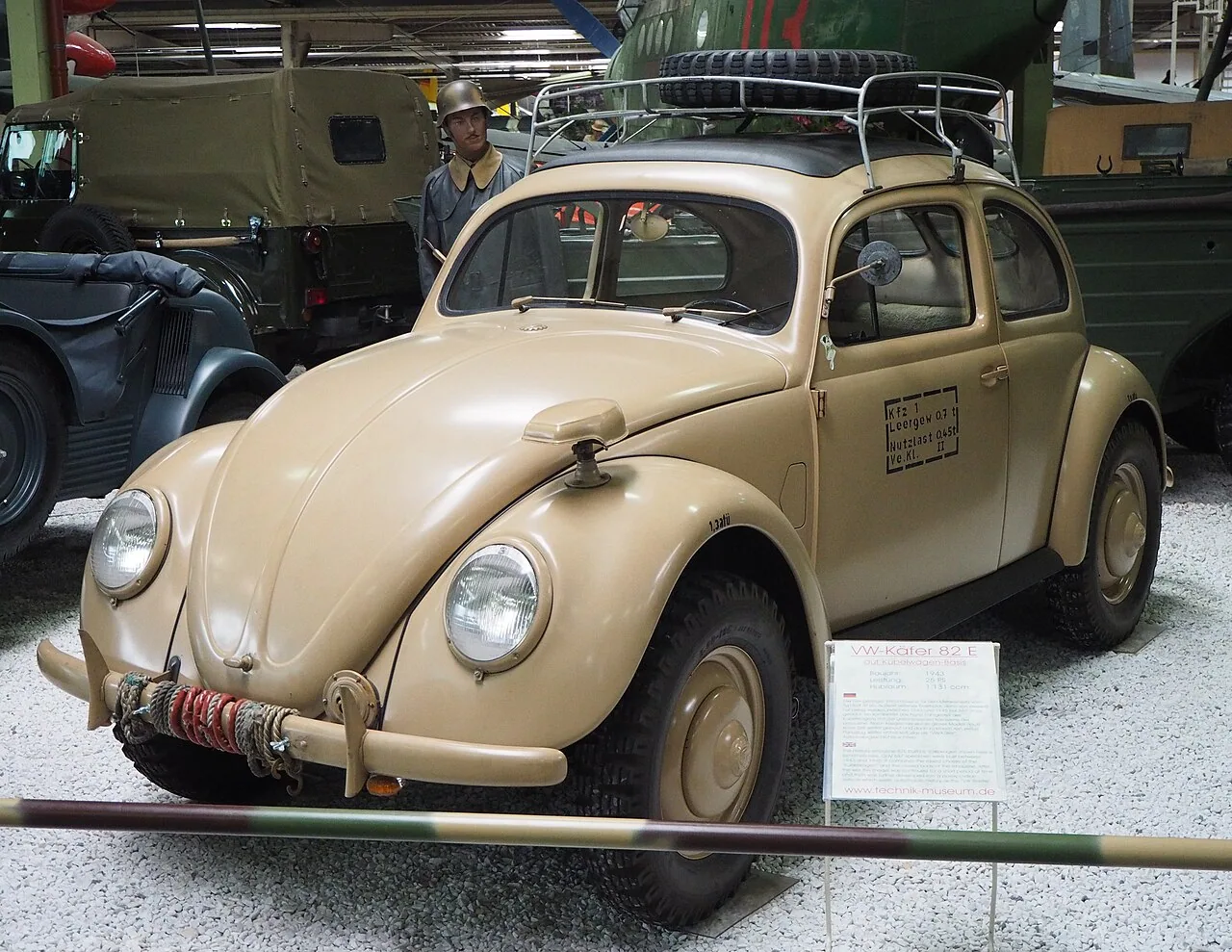
The first two prototypes, designated V1 (a sedan) and V2 (a convertible), were completed in October 1935. The 'V' prefix stood for Versuchs, the German word for prototype. Testing of three V3 prototypes began on 11 July 1936; the first was driven to Obersalzberg for inspection by Hitler, and two others were delivered to Berlin in August for examination by Nazi Party officials. By June 1936 the V3 vehicles had covered more than 50,000 km across varied terrain.
A further thirty W30 development models, commissioned by Porsche and built by Daimler-Benz, underwent testing from early April 1937, accumulating a combined total of over 2,900,000 kilometres. All vehicles in the development sequence shared the characteristic rounded silhouette and air-cooled rear-mounted engine. A batch of 44 VW38 pre-production cars built in 1938 introduced split rear windows, followed by fifty VW39 cars completed in July 1939.
The KdF-Wagen and World War II
During development, the car was administered by Kraft durch Freude (Strength Through Joy), a Nazi political organisation charged with providing leisure activities to the German population. The organisation's head, Robert Ley, announced in 1938 that every German would own a Volkswagen within a decade. High fuel taxes in Germany at the time, however, raised the practical cost of car ownership and complicated that ambition.
Volkswagen had intended to begin civilian production in the late 1930s, but the outbreak of World War II in 1939 halted those plans. Full production did not resume until 1945, after the war ended. During this intervening period the car was known internally as the KdF-Wagen rather than by the Volkswagen or Beetle names that would come later.
Production history and global reach
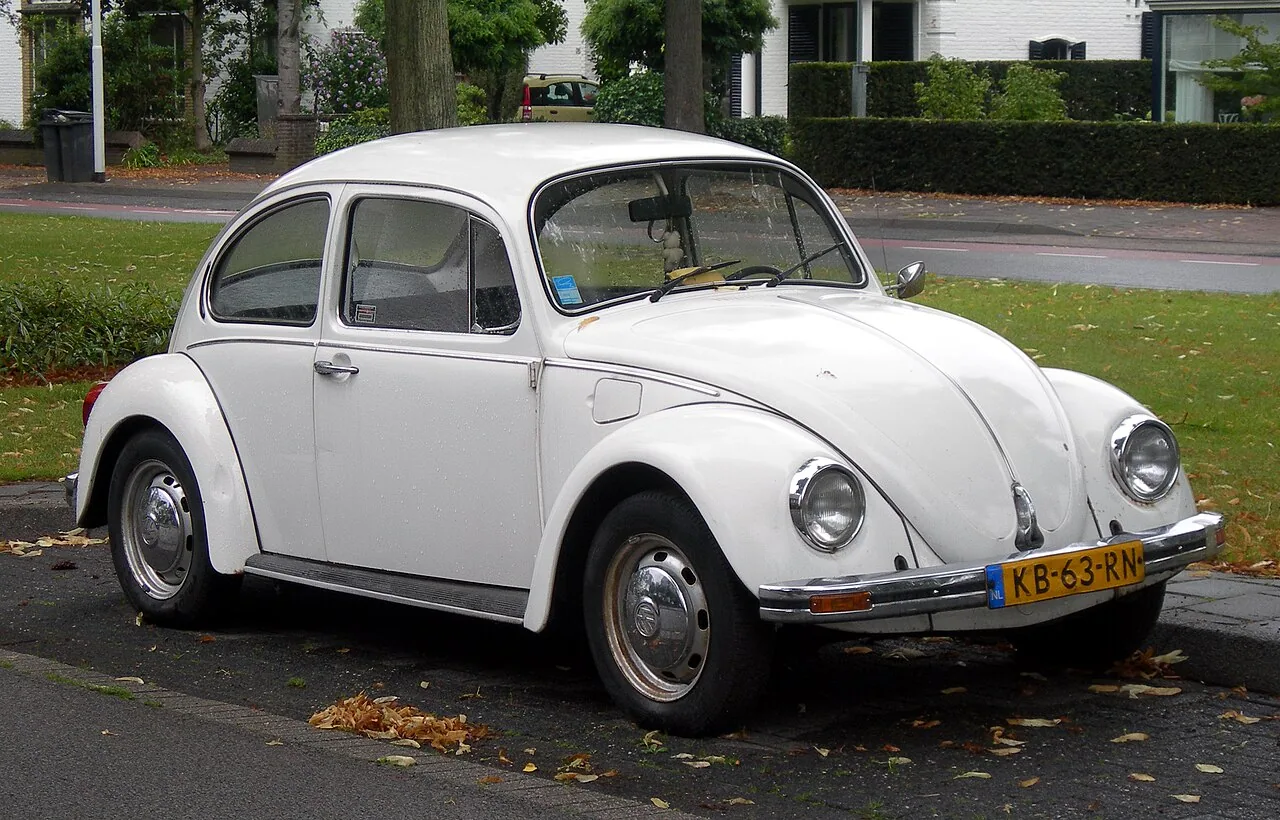
Once civilian production commenced after 1945, the Beetle became the principal product of the Volkswagen brand and was marketed simply as 'the Volkswagen' for many years. It was not until 1968 that the name 'Beetle' was officially adopted. Despite the constancy of its overall silhouette, Volkswagen implemented more than 78,000 updates to the car across its production life, addressing exterior styling details, interior fittings, colours, lighting, engines, and systems.
The car was manufactured across twenty locations around the world, reflecting its reach into markets on multiple continents. In 1972, cumulative output surpassed the total production of the Ford Model T, making the Beetle the best-selling car of all time at that point, a record it retained for 25 years. Final production ended in 2003, with the total standing at 21.5 million units—the highest figure ever recorded for a single automobile platform.
Model designations
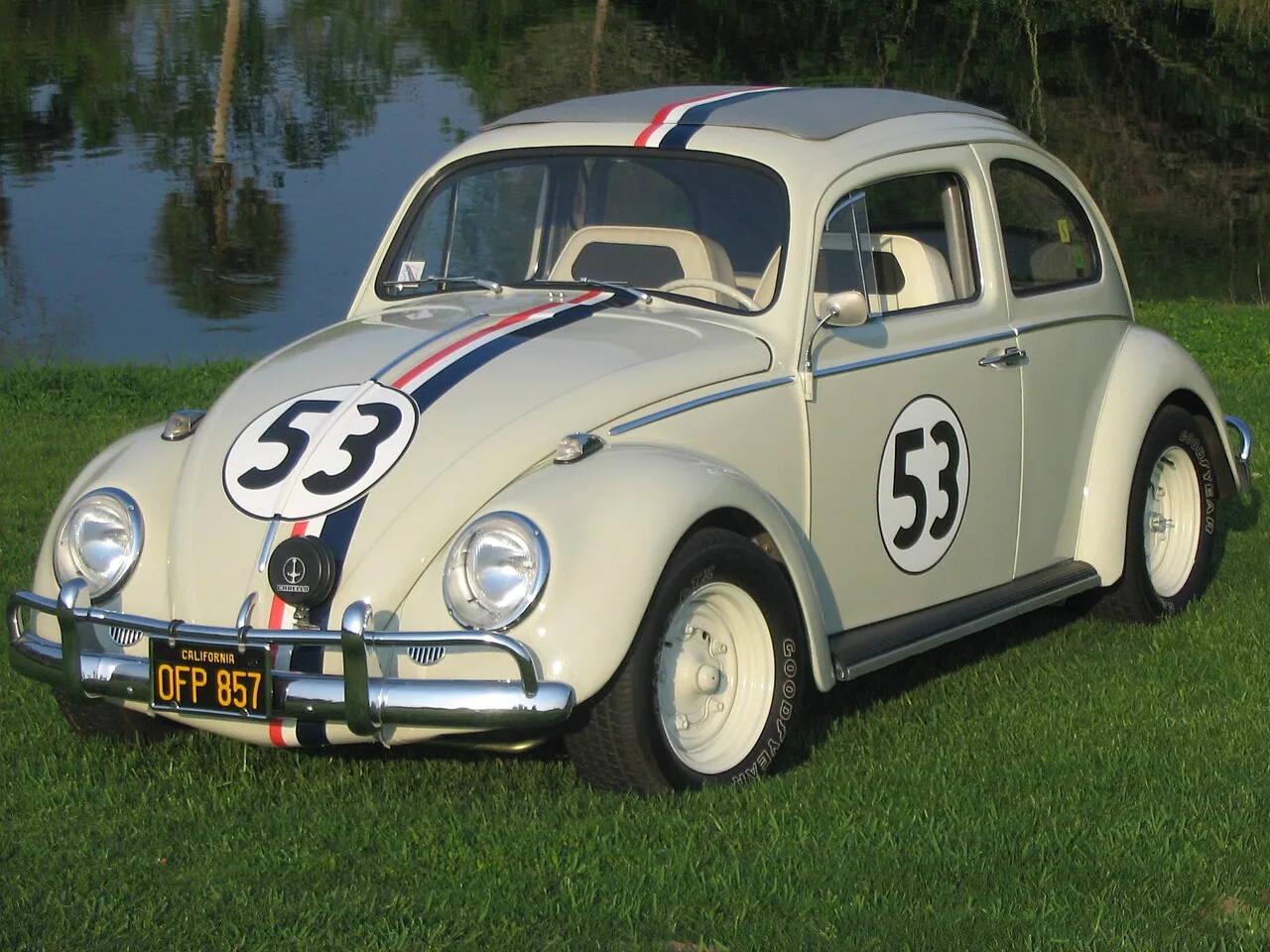
During the 1960s, Volkswagen introduced a system of numeric designations to differentiate Beetle variants. These designations—1200, 1300, 1500, and 1600—reflected differing engine displacements available within the model range. Later, the designations 1302 and 1303 were introduced, distinguishing variants with updated suspension and bodywork modifications while retaining the fundamental rear-engined, air-cooled configuration.
Throughout the 1960s and 1970s, Volkswagen also launched a series of larger, more upmarket models intended to complement the Beetle in its lineup. These comprised the Type 3, the Type 4, and the K70. None achieved the commercial success of the Beetle, underscoring how firmly the original car's formula had resonated with buyers.
Why did Beetle production decline?
By the early 1970s, consumer preferences in Europe were shifting toward front-wheel-drive compact hatchbacks, a configuration that contrasted with the Beetle's rear-wheel-drive, rear-engined layout. Volkswagen responded by pivoting its model strategy, launching the Golf in 1974 as the first step in a broader transition to a Golf-based vehicle range. The Golf and its derivatives gradually displaced the Beetle in the company's core European markets.
In the late 1970s and through the 1980s, Japanese manufacturers began capturing significant market share across the world, adding further pressure on the Beetle's sales. The combination of changing consumer tastes and intensified competition from Japanese automakers contributed to a steady erosion of the Beetle's popularity in its remaining markets, ultimately leading to the conclusion of production in 2003.
Cultural significance and legacy
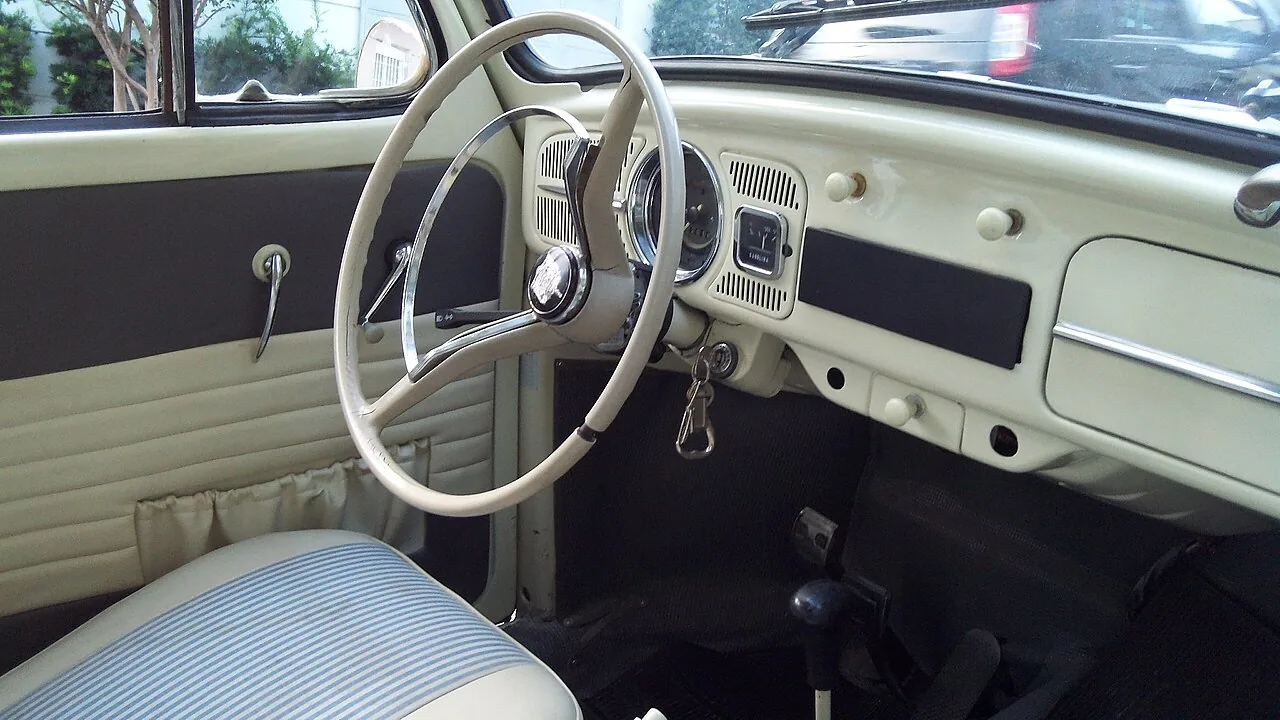
The Beetle's design remained sufficiently consistent over 65 years to function as an immediately recognisable symbol, and it accumulated a cultural presence extending well beyond the automotive sector. Its success demonstrated that a single body style, when well-executed and continuously refined, could sustain mass-market appeal across multiple decades and dozens of countries.
The car is widely regarded as one of the most influential automobiles of the 20th century, and its commercial achievements shaped the way Volkswagen subsequently developed and marketed its products. The Beetle's platform longevity—65 years without a generational change—remains unmatched in automotive history, and the 21.5 million units produced represent the highest total for any single automobile platform on record.
Frequently asked questions
What is the official name of the Volkswagen Beetle?
The car's official designation is the Volkswagen Type 1. The name 'Beetle' was not formally adopted by Volkswagen until 1968; before that, the car was marketed simply as 'the Volkswagen'. Earlier in its development history it was known as the KdF-Wagen.
How many Volkswagen Beetles were produced in total?
A total of 21.5 million Beetles were manufactured over the course of the model's production life, making it the best-selling car of a single platform in history. Production took place across twenty locations worldwide and ran from 1938 to 2003.
Who designed the Volkswagen Beetle?
The project was led by Ferdinand Porsche, whose team included Erwin Komenda for bodywork, Josef Kales for the engine, and Karl Rabe as chief engineer. However, the fundamental design concept is attributed to Béla Barényi, who outlined it in 1925, nearly a decade before Porsche's development work commenced.
When did the Beetle become the best-selling car of all time?
In 1972 the Beetle's cumulative production surpassed the total output of the Ford Model T, at which point it became the best-selling car of all time. The Beetle held that record for 25 years.
What model designations did the Volkswagen Beetle use?
Volkswagen introduced numeric designations for Beetle variants during the 1960s. These included the 1200, 1300, 1500, and 1600, which denoted different engine displacements, as well as the later 1302 and 1303 designations that corresponded to variants with updated suspension and bodywork.
Why did Volkswagen stop making the Beetle?
European consumers shifted during the 1970s toward front-wheel-drive compact hatchbacks, a layout incompatible with the Beetle's rear-engined, rear-wheel-drive design. Volkswagen introduced the Golf in 1974 to address this market shift, and Japanese manufacturers' growing global dominance in the late 1970s and 1980s further reduced the Beetle's commercial viability.
How long was the Volkswagen Beetle in production?
The Beetle was in production for 65 years, from 1938 to 2003, the longest continuous production run of any single generation of automobile. Despite this duration, the car's overall design remained recognisably consistent, with Volkswagen making more than 78,000 incremental updates rather than fundamental redesigns.
What other models did Volkswagen introduce alongside the Beetle?
During the 1960s and 1970s Volkswagen launched the Type 3, the Type 4, and the K70 as larger, more upmarket companions to the Beetle. None of these models replicated the Beetle's commercial success, and it was only the Golf, introduced in 1974, that successfully transitioned Volkswagen to a new product generation.
Sources
- Wikipedia: Volkswagen Beetle — Factual basis of this entry