Mini (marque)
Mini is a British automotive brand stylised in uppercase as MINI. Though the word Mini had appeared in car model names since 1959, the brand was formally constituted in 1969 when the separate Austin Mini and Morris Mini designations were replaced by a single Mini marque. Since 2000 it has been marketed by the German multinational BMW, which assembles Mini vehicles in the United Kingdom, Austria, Germany, and formerly the Netherlands.
In 1999 the original Mini was voted the second most influential car of the twentieth century, behind the Ford Model T. Its front-wheel-drive layout allowed 80 per cent of the floorpan area to be used for passengers and luggage, a space-efficiency that shaped a generation of subsequent small-car design.
| Brand founded | 1969 (Oxford, England) |
| Parent company | BMW (since 2000; acquired Rover Group in 1994) |
| Original manufacturer | British Motor Corporation (BMC), from 1959 |
| Original production ended | 2000 |
| BMW-era production launched | 2001 |
| Worldwide sales (2012) | 301,526 vehicles |
| Current model range | Cooper Hatch/Hardtop (3- and 5-door), Convertible, Aceman, Countryman |
| Principal assembly plant | Plant Oxford, Cowley, Oxfordshire (former Morris Motors site) |
| Monte Carlo Rally victories (Cooper S) | 1964, 1965, 1967 |
| WRC participation | 2011 and 2012, via Prodrive WRC Team |
Origins of the Mini name and marque
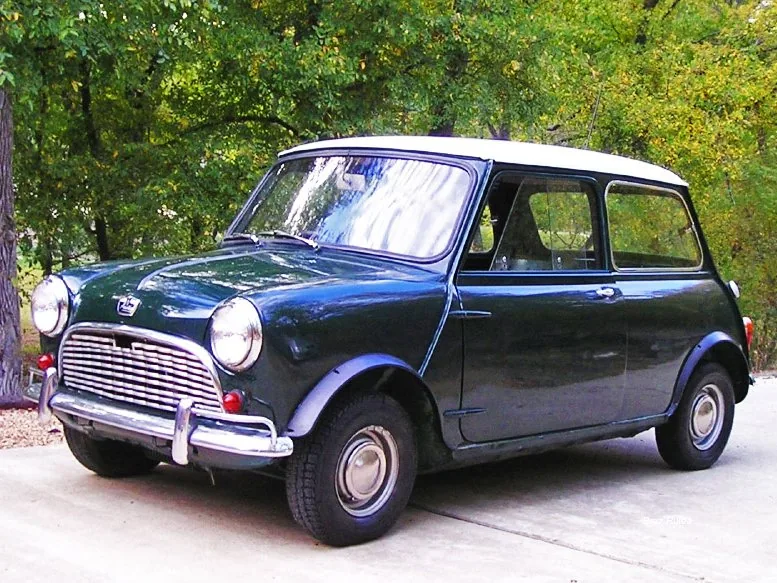
When BMC launched its small car in 1959 it carried two separate badges: the Austin Seven and the Morris Mini-Minor. Both names referred to the same underlying vehicle, reflecting BMC's practice of marketing identical cars through its constituent Austin and Morris dealer networks. The word Mini appeared in those names from the outset but did not designate an independent marque.
In 1969 the Austin and Morris prefixes were dropped and Mini became a marque in its own right. The brand was then carried forward through successive corporate reorganisations: BMC became part of British Motor Holdings in 1966, which merged with Leyland Motors in 1968 to form British Leyland. In the 1980s British Leyland was broken up, and in 1988 the residual Rover Group, including Mini, passed to British Aerospace. In the 1980s the car was also briefly re-badged under the Austin name before reverting to Mini.
Who designed the original Mini?
The original two-door Mini was designed for BMC by Sir Alec Issigonis. The front-wheel-drive layout he devised placed the engine transversely, freeing up an unusually large proportion of the floorpan for occupants and their luggage. This configuration proved highly influential on subsequent small-car engineering worldwide.
Production took place at BMC's Longbridge and Cowley plants in England, and was later extended to overseas facilities in Australia (the Victoria Park and Zetland factory in Sydney), Spain under the Authi name, Belgium, Chile, Italy under the Innocenti name, Portugal, South Africa, Uruguay, Venezuela, and Yugoslavia.
Original model variants
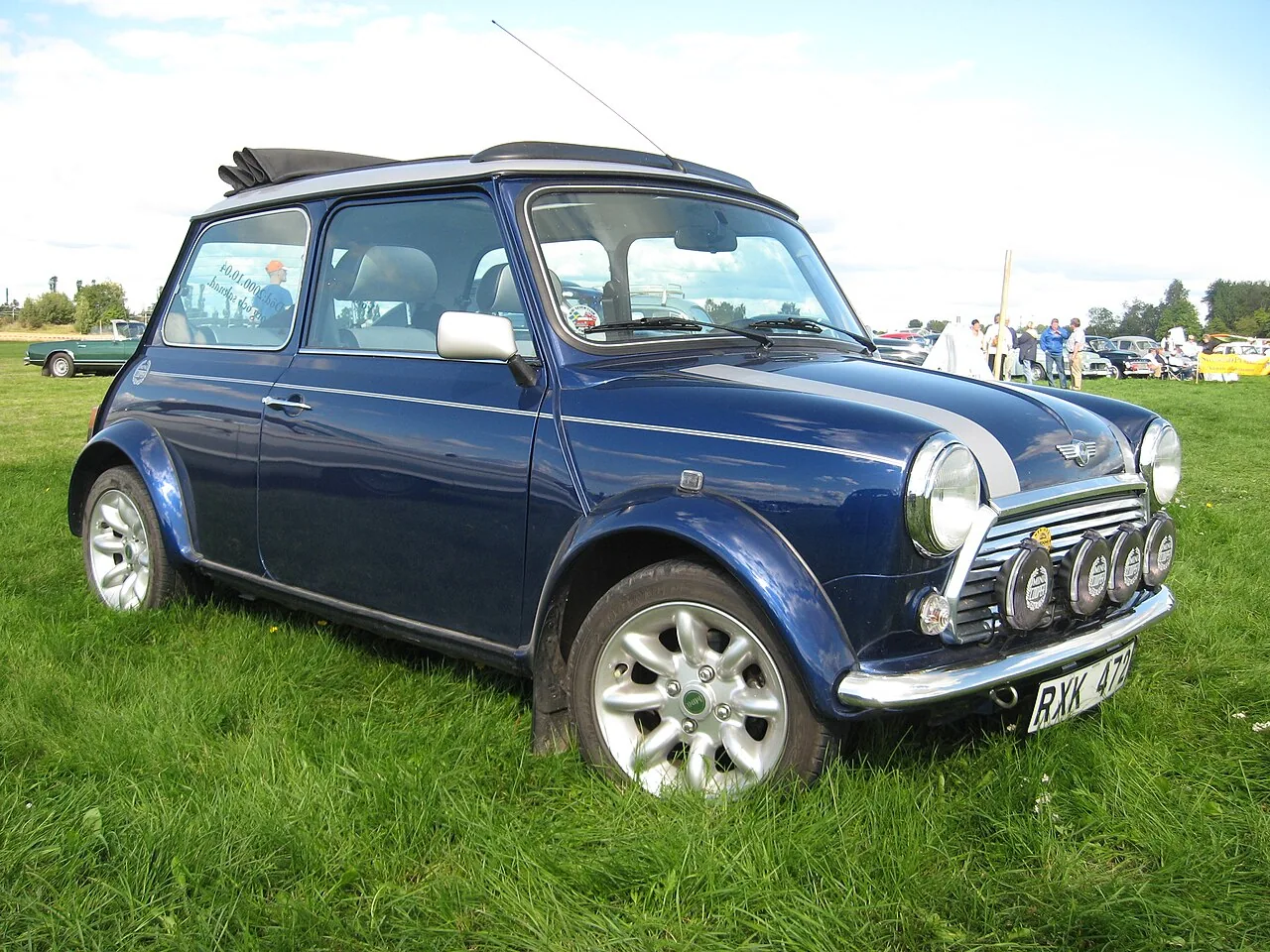
The basic Mini progressed through three principal UK specification updates: the Mark I, the Mark II, and the Mark III. Alongside these ran the Clubman, a restyled variant with a squared-off nose. Within the broader range, BMC and its successors offered an estate car sold as the Countryman, a pickup truck, a van, and the Mini Moke, a lightweight open vehicle with a jeep-like character.
Performance derivatives carried the Cooper name, reflecting a commercial partnership with racing team owner John Cooper. The Cooper and the more powerful Cooper S were developed specifically for competition use and proved particularly effective in rallying. The original Mini in all its forms remained in production until 2000.
How did the Mini perform in motorsport?
The Mini Cooper S won the Monte Carlo Rally on three occasions: in 1964, 1965, and 1967. At the 1966 event, the Mini and six other British entrants were disqualified after the finish under a ruling that their cars had used an illegal combination of headlamps and spotlights; the first four cars to finish had all been Minis. Counting the disputed 1966 result, the Mini could be credited with four outright victories across that period.
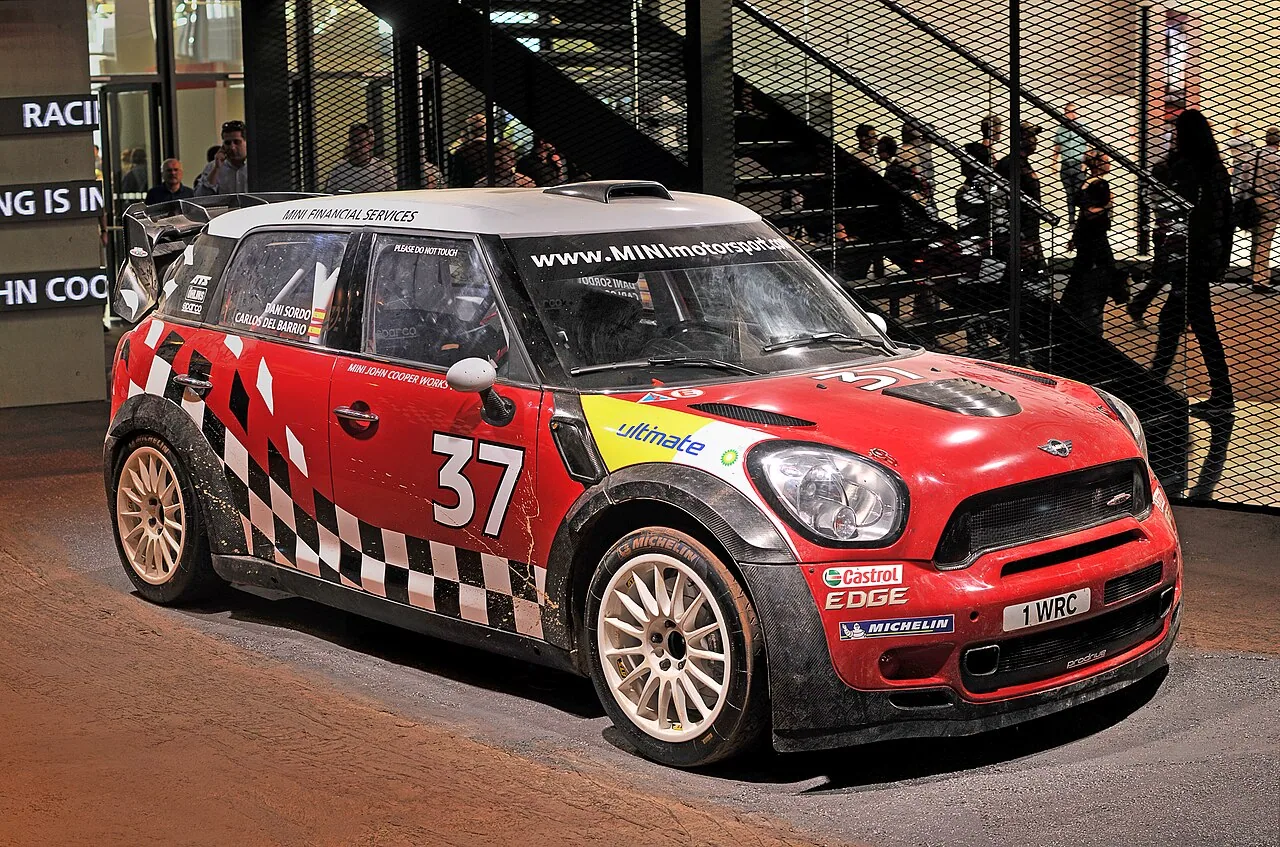
In the modern era, Mini participated in the FIA World Rally Championship during 2011 and 2012 through the Prodrive WRC Team, returning the marque to international rally competition under BMW ownership.
BMW acquisition and development of a successor
BMW acquired Rover Group from British Aerospace in early 1994, bringing the Mini brand into its portfolio. The company identified Mini as an opportunity to produce a premium compact car that did not need to conform to BMW's own rear-wheel-drive engineering standards. During the late 1990s, Rover itself was also working on a successor concept: the ACV30, unveiled at the 1997 Monte Carlo Rally, was a two-door coupe with a rear-mounted MG F engine, its designation partly an acronym of Anniversary Concept Vehicle, with the number 30 marking the years since a Mini first won that rally.
Rover followed the ACV30 with two further concepts called Spiritual and Spiritual Too, intended as more production-realistic proposals. These coincided with BMW formally establishing its own Mini development project. When BMW subsequently broke up Rover Group, it retained the Mini brand and proceeded to develop the modern successor independently.
BMW-era production and assembly plants
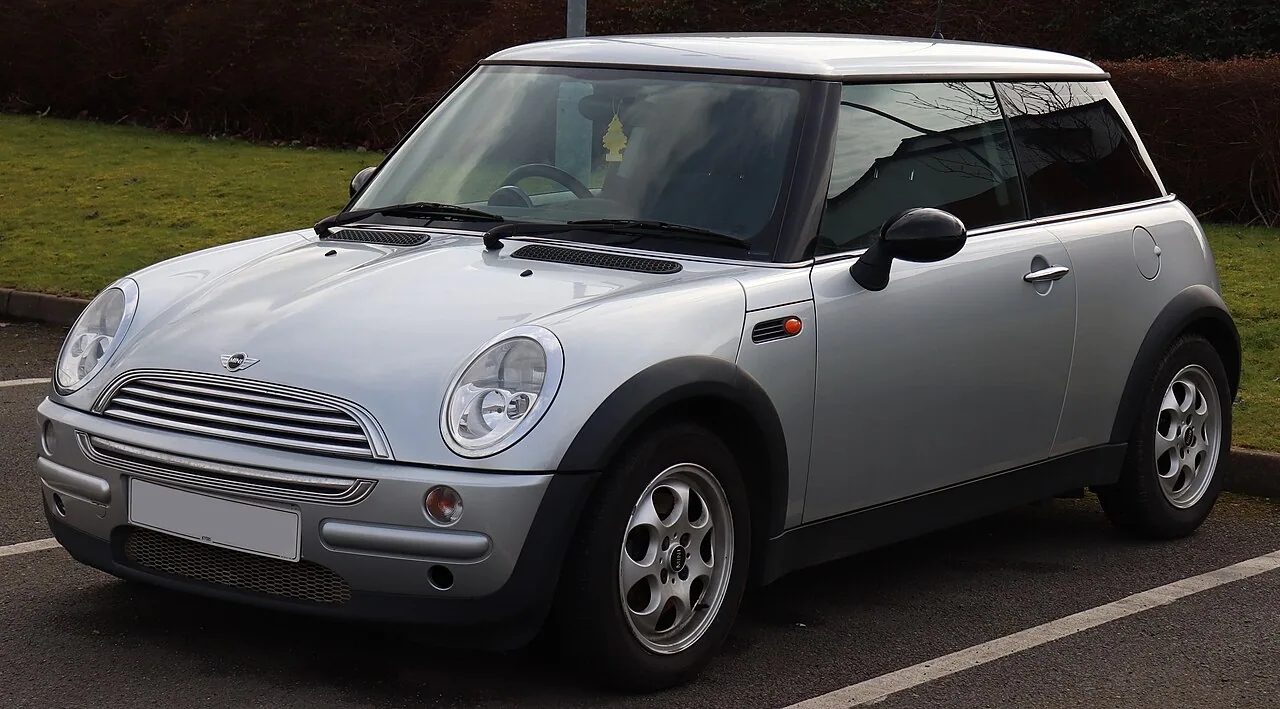
The BMW-developed Mini launched in 2001 and was built at Plant Oxford in Cowley, Oxfordshire, the historic former Morris Motors facility. Total worldwide sales reached 301,526 vehicles in 2012. The Oxford plant also assembled the Mini Clubman, the Coupe, and the Roadster. From 2024, all combustion-engined Cooper hatch and convertible production in the F65, F66, and F67 generations has been centralised at Oxford.
Assembly was distributed across several additional sites. The first-generation Countryman (R60) and the Paceman were built by Magna Steyr in Austria. The third-generation Mini Convertible (F57) and second-generation Countryman (F60) were assembled at VDL Nedcar in Born, Netherlands, a facility that ceased Mini production on 16 February 2024. The F56 three-door Hatch was built at both Oxford and Born, while the five-door F55 was exclusive to Oxford. The third-generation Countryman (U25) is produced at BMW's Leipzig plant in Germany.
Current model range
The current Mini lineup comprises the Cooper Hardtop, also marketed as the Hatch, available as a three-door and a five-door hatchback, together with a Convertible body style. Two five-door crossover models complete the range: the Aceman and the Countryman.
Mini vehicles in the current range are assembled across sites in the United Kingdom, Austria, Germany, and China, reflecting the global manufacturing structure BMW established after acquiring the marque.
Frequently asked questions
When did Mini become a standalone marque rather than a model name?
Mini became an independent marque in 1969, when the Austin Mini and Morris Mini designations were retired and replaced by the single Mini brand name. Before that date, from 1959 onwards, the word Mini appeared as part of car model names but belonged to the Austin and Morris brands respectively.
When did BMW take ownership of Mini?
BMW acquired Mini indirectly in early 1994 when it purchased Rover Group from British Aerospace. Rover Group had itself inherited Mini through the chain of corporate mergers that produced British Leyland and its successors. BMW began marketing Mini vehicles in 2000 and launched its first new-generation model in 2001.
Where are Mini cars assembled?
The primary assembly plant is Plant Oxford in Cowley, Oxfordshire, the former Morris Motors site. Additional production takes place at BMW's Leipzig plant in Germany, where the third-generation Countryman (U25) is built, and at a facility in Austria operated by Magna Steyr for earlier Countryman and Paceman models. Mini production in the Netherlands at VDL Nedcar ended on 16 February 2024, and China also features as an assembly location.
How many times did the Mini win the Monte Carlo Rally?
The Mini Cooper S won the Monte Carlo Rally in 1964, 1965, and 1967, three confirmed victories. At the 1966 event the Mini finished first but was disqualified along with six other British entrants over a ruling concerning headlamp and spotlight combinations, a decision widely regarded as questionable at the time.
What were the main body styles and variants of the original Mini?
The original Mini was offered in several forms beyond the basic two-door saloon: the Countryman estate, a pickup truck, a van, and the open-topped Moke. Performance variants were badged Cooper and Cooper S. The range also included the Clubman, a restyled version with a distinctive squared nose, and underwent three major UK specification updates as the Mark I, Mark II, and Mark III.
Who designed the original Mini and what made its layout significant?
Sir Alec Issigonis designed the original Mini for BMC. His transverse front-wheel-drive layout allowed 80 per cent of the car's floorpan area to be devoted to passengers and luggage, a highly efficient use of space that influenced car designers across subsequent decades.
Did Mini participate in the World Rally Championship under BMW ownership?
Yes. Mini competed in the FIA World Rally Championship in 2011 and 2012 through the Prodrive WRC Team. This represented a return to top-level international rallying for a marque with a strong historical association with the sport through its Monte Carlo Rally victories in the 1960s.
How significant was the original Mini in automotive history?
In 1999 the original Mini was voted the second most influential car of the twentieth century, behind the Ford Model T. It has been described as a British equivalent of the Volkswagen Beetle in terms of cultural impact, and its engineering layout shaped a generation of small-car manufacturers worldwide.
Sources
- Wikipedia: Mini (marque) — Factual basis of this entry