Land Rover Defender
The Land Rover Defender is a series of British four-wheel-drive off-road vehicles and pickup trucks, tracing its direct lineage to the Land Rover series first shown at the Amsterdam Motor Show in April 1948. The model line began in 1983 with the Land Rover One Ten, was joined by the Land Rover Ninety in 1984 and the Land Rover One Two Seven in 1985, and was collectively renamed Defender 90, Defender 110 and Defender 130 in 1990 following the introduction of the Land Rover Discovery as a separate model. Production continued for over three decades before ending on 29 January 2016.
By the time production ceased, a total of just over two million Land Rover Series and Defender models had been built, with the final vehicle — carrying the number plate H166 HUE, a deliberate reference to the first pre-production Land Rover registered HUE 166 — recorded as the 2,016,933rd Defender produced.
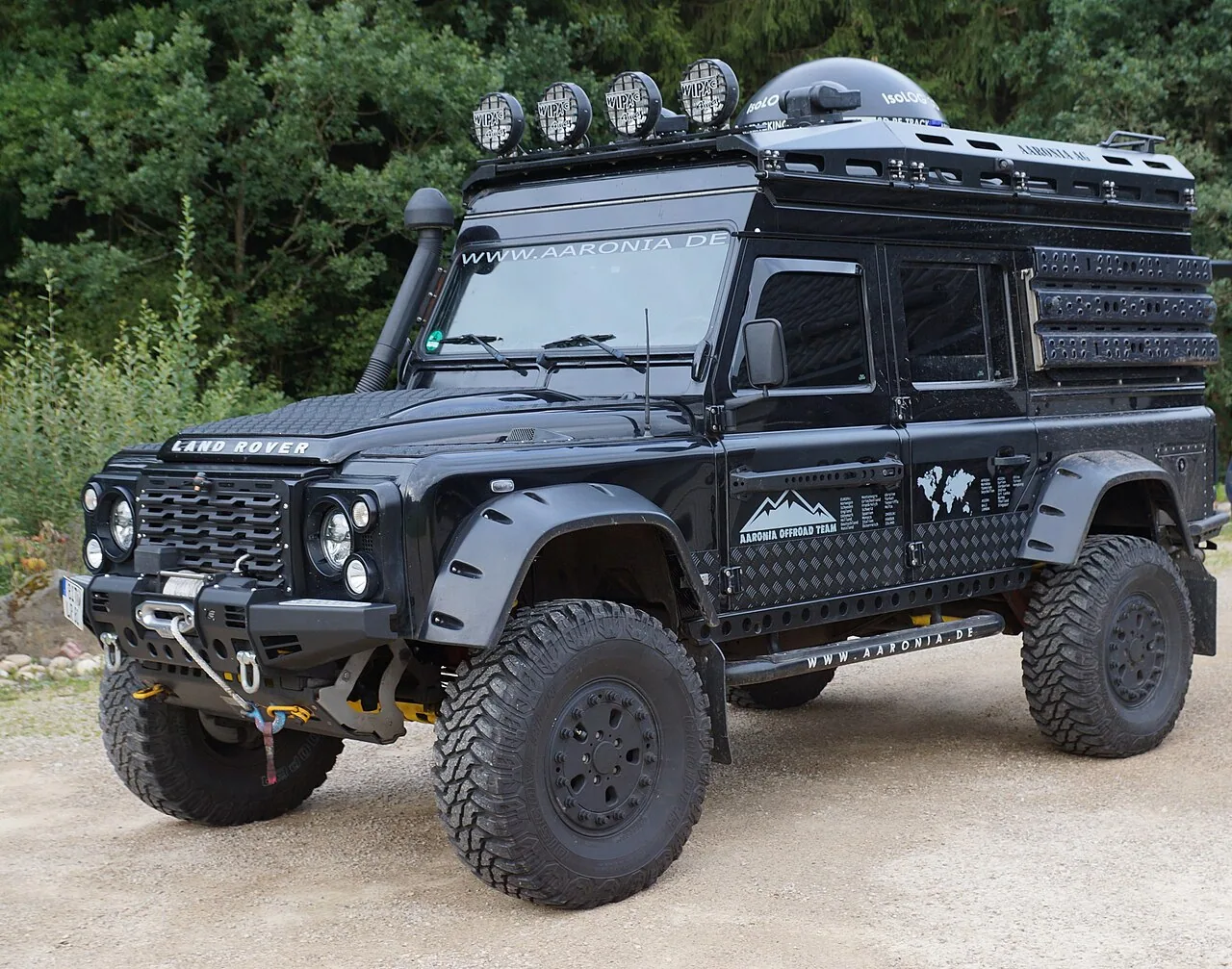
| Type | Four-wheel-drive off-road vehicles and pickup trucks |
| Manufacturer | Land Rover (British) |
| Production start | 1983 (Land Rover One Ten) |
| Production end | 29 January 2016 |
| Total production (Series and Defender combined) | Just over two million units |
| Wheelbase variants | 90 in (92.9 in actual), 110 in (2,800 mm), 127 in (3,226 mm) |
| Renamed as Defender | 1990, for 1991 model year |
| Body construction | Steel ladder chassis with aluminium alloy bodywork |
| Drive system | Permanent four-wheel drive with centre differential |
| Suspension | Coil springs front and rear (departing from leaf springs of Series III) |
Origins and development from the Land Rover Series
The Defender's direct ancestor, the Land Rover Series, was introduced at the Amsterdam Motor Show in April 1948. The post-1983 vehicles were conceived as a development of that lineage rather than an entirely new generation design, though they incorporated significant mechanical changes. Externally, the differences were subtle: a full-length bonnet, a revised grille, and wheel arch extensions to accommodate wider-track axles were the most visible departures from the outgoing Series III.
The most consequential engineering changes were the adoption of coil springs at both axles in place of the leaf springs used on the Series, and the addition of a centre differential to the transfer case to provide permanent four-wheel drive. Both features were derived directly from the original Range Rover. Coil springs improved both ride quality and axle articulation, and the interiors were modernised at the same time. Engines were carried over from the Series III initially, though a progressive programme introduced newer and more powerful units over subsequent years.
How did the model names and badges change over time?
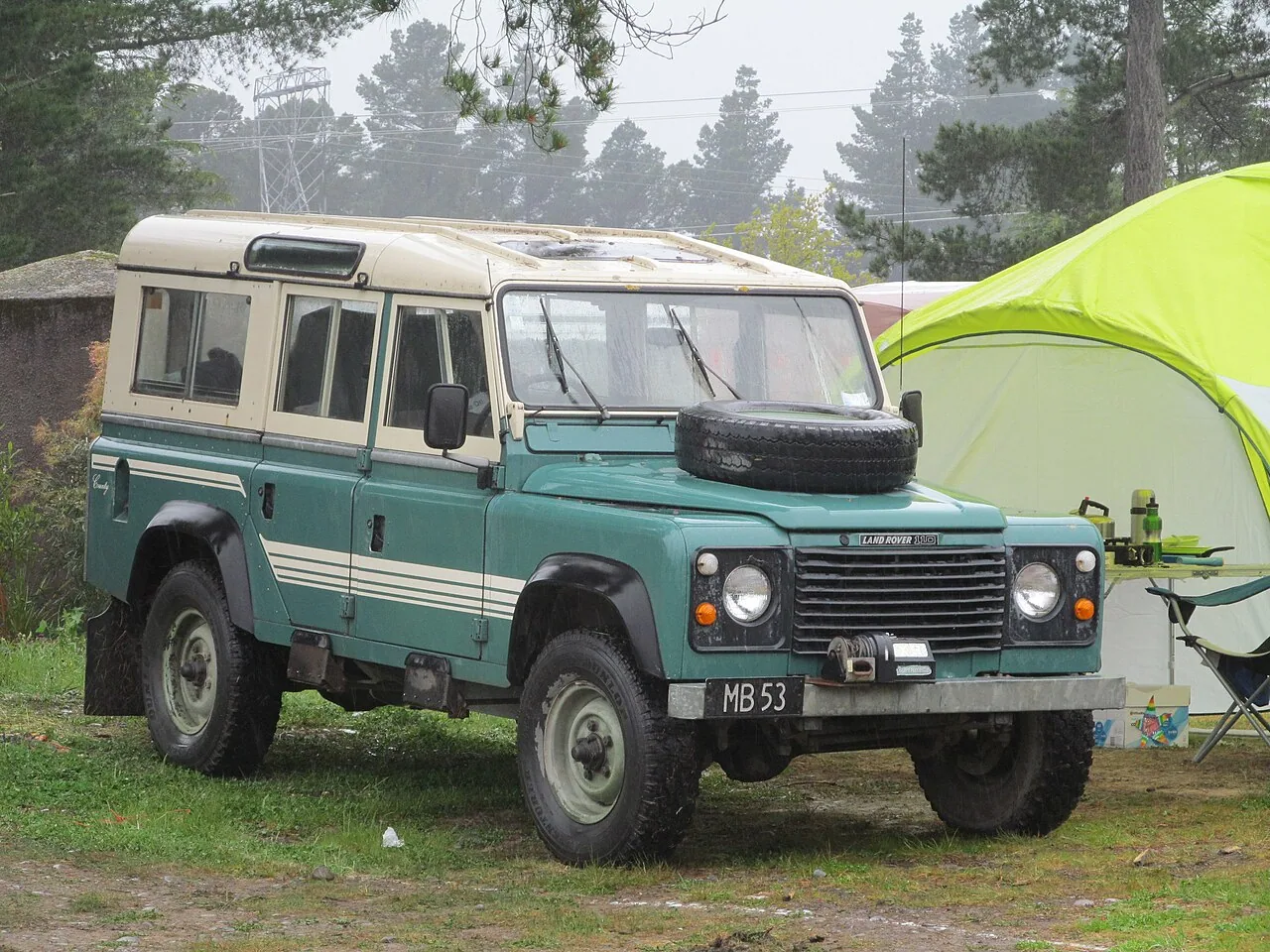
When the coil-sprung model debuted in 1983 it was marketed as the Land Rover One Ten, with the wheelbase figure spelled out in full in advertising and owner handbooks. Vehicles carried numerical badges — reading Land Rover 90 or Land Rover 110 — above the radiator grille. The One Two Seven, introduced in 1985 with its 127-inch (3,226 mm) wheelbase, was always marketed with its name rendered numerically rather than spelled out.
The naming changed for the 1991 model year after Jaguar Land Rover introduced the Discovery in 1989, making Land Rover a marque name rather than a model name. To prevent confusion within an expanding range, the Ninety and One Ten became the Defender 90 and Defender 110, and the One Two Seven became the Defender 130, though its wheelbase remained unchanged. These vehicles carried a Defender badge at the front and a combined Defender 90 or Defender 110 badge at the rear.
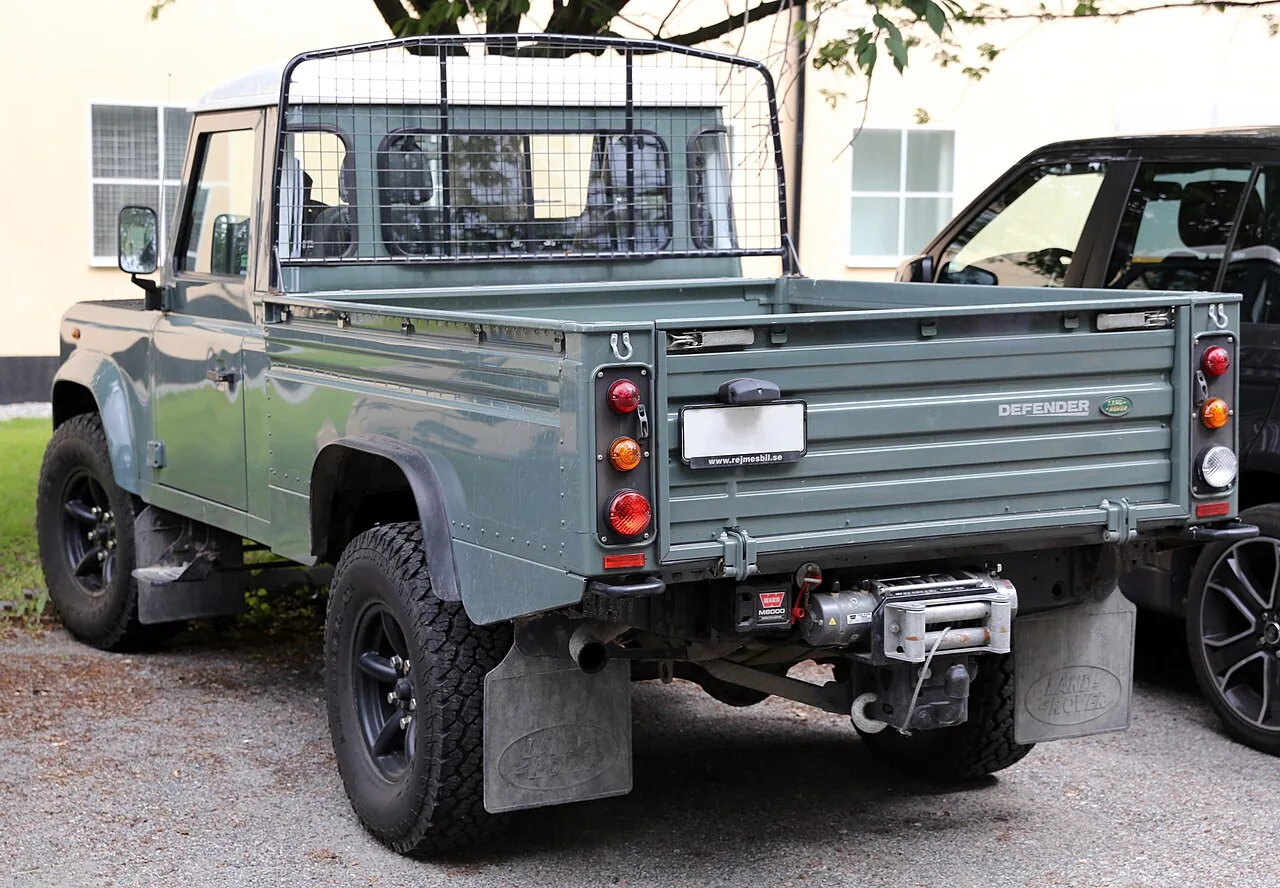
The final production generation, the L316 model sold from 2007 to 2016, removed wheelbase-specific rear badging. Instead, the word Land Rover appeared in raised individual letters across the leading edge of the bonnet, in keeping with the Discovery and Freelander of the same era, and a redesigned Defender badge with an underlining swoosh appeared at the rear.
North American Specification variants
Land Rover offered a North American Specification (NAS) Defender from the 1993 model year. The NAS Defender 110 sold in 1993 carried a Defender badge above the radiator grille, while the NAS Defender 90 models sold from 1994 to 1997 instead had Land Rover spelled across the top of the radiator grille in individual letter decals.
NAS Defenders also featured a cast plaque on the rear tub in the style of the original Series estate cars, displaying Defender 110 or Defender 90 beneath the Land Rover lozenge together with the vehicle's unique limited-edition production run number. Sales in North America ended after the 1997 model year, attributed to low sales volumes and the modifications that would have been required to meet updated safety standards.
Wheelbase dimensions and what the numbers actually meant
The three model designations — 90, 110 and 130 — referred nominally to wheelbase lengths expressed in inches, following the precedent set by the earlier Series 88 and 109 models. All actual measurements were metric, but communicated in the nearest familiar imperial figures. The One Ten had a wheelbase of 2,800 mm, presented as 110 inches. The Ninety's actual wheelbase measured 92.9 inches (2,360 mm), making the name approximate rather than precise. The One Two Seven had a wheelbase of 3,226 mm, corresponding to 127 inches.
When the Defender name was adopted for the 1991 model year, these approximate wheelbase figures transferred directly to become the 90, 110 and 130 suffixes. The wheelbase of the vehicle that became the 130 was unchanged by the renaming.
Production run and longevity
Production of the Land Rover Series and Defender ran for 67 continuous years before the last vehicle left the line on 29 January 2016. The two millionth unit of the combined Series and Defender lineage was assembled in May 2015 with the assistance of a specially convened team and was subsequently sold by charitable auction for the International Federation of Red Cross and Red Crescent Societies. The final Defender, the 2,016,933rd vehicle produced, bore the number plate H166 HUE, chosen as a direct reference to the pre-production Land Rover registered HUE 166.
When assessed against the broader history of automobile manufacturing, the 90/110 and Defender models' 33-year production run, taken alone and excluding the preceding Series Land Rovers or any licence-built products, ranked as the sixteenth longest single-generation car in history as of 2020.
Special editions and final years
Following the end of regular production, Land Rover announced the Defender Works V8 in January 2018. This special edition produced 400 bhp (298 kW), considerably more than the standard production vehicles.
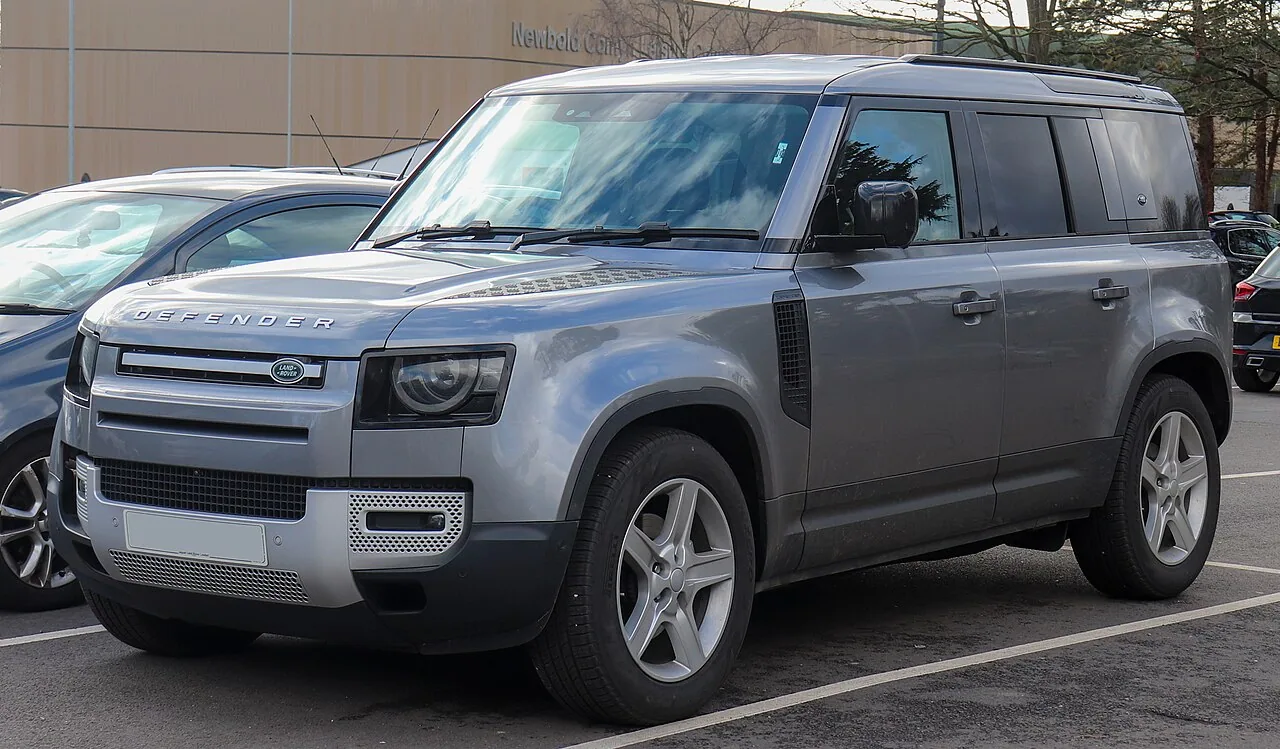
In September 2019, an entirely new generation of Defender made its global debut, offered initially in two wheelbase configurations. This successor, known internally as the L663, shares no components or technology with the original Defender lineage. It departs fundamentally from its predecessor by using an aluminium monocoque body rather than a separate steel ladder chassis, and by employing all-round independent suspension in place of the live rigid axles that characterised every previous Defender.
Construction and heritage
Throughout its production life the original Defender retained the steel ladder chassis and aluminium alloy bodywork that distinguished the Land Rover series from its inception. This construction gave the vehicle a reputation for ruggedness and versatility, drawing comparisons with the Willys Jeep derived from Second World War military requirements. The permanent four-wheel-drive system, with its centre differential, together with the coil-spring suspension, gave the Defender superior off-road axle articulation relative to the leaf-sprung Series models it replaced.
At the time the One Ten was launched in 1983, the only other Land Rover model in production was the Range Rover. The expansion of the range to include the Discovery in 1989 was the event that prompted the formal adoption of the Defender name, repositioning what had been the original Land Rover product as one of several distinct models within a broader marque.
Frequently asked questions
When did Land Rover Defender production start and end?
Production of the model that would become the Defender began in 1983 as the Land Rover One Ten, with the Ninety following in 1984 and the One Two Seven in 1985. The Defender name was adopted for the 1991 model year. Regular production ended on 29 January 2016 after a continuous run of 67 years when including the preceding Series Land Rovers.
Why was it renamed from Ninety and One Ten to Defender?
In 1989 Land Rover launched the Discovery as a separate model, at which point Land Rover became a marque name covering multiple models rather than the name of a single vehicle. To avoid confusion within the expanded range, the Ninety and One Ten were renamed Defender 90 and Defender 110 for the 1991 model year, and the One Two Seven became the Defender 130.
How many Defenders were built in total?
A combined total of just over two million Land Rover Series and Defender models were built across the full 67-year production run. The final vehicle produced was recorded as the 2,016,933rd Defender and left the line on 29 January 2016.
What does the number in Defender 90, 110 and 130 refer to?
The numbers refer to approximate wheelbase lengths expressed in inches, following the convention established by the earlier Series 88 and 109 models. The actual wheelbase of the Ninety measured 92.9 inches (2,360 mm), the One Ten was 2,800 mm, and the One Two Seven and subsequent 130 had a wheelbase of 3,226 mm (127 inches). All measurements were metric but expressed in the nearest familiar imperial figures.
What were the key mechanical differences from the Land Rover Series?
The most significant changes were the adoption of coil springs front and rear in place of leaf springs, and the addition of a centre differential providing permanent four-wheel drive. Both features were carried over from the original Range Rover. Coil springs delivered improved ride quality and better axle articulation for off-road use.
When did the Defender stop being sold in North America?
The Defender was last sold in North America in 1997, after being available there from the 1993 model year. Its withdrawal was attributed to low sales and the modifications that compliance with updated safety standards would have required.
Is the 2020 Land Rover Defender the same vehicle as the original?
No. The 2020 Defender, known internally as the L663, shares no components or technology with the original model. It uses an aluminium monocoque body rather than a separate steel ladder chassis, and all-round independent suspension rather than the live rigid axles of every preceding Defender. It made its global debut in September 2019.
What was the Defender Works V8?
The Defender Works V8 was a special edition announced in January 2018, after regular production of the original Defender had ended in January 2016. It produced 400 bhp (298 kW), substantially more power than the standard production models.
Sources
- Wikipedia: Land Rover Defender — Factual basis of this entry