Citroën DS
The Citroën DS is a front mid-engined, front-wheel-drive executive car manufactured and marketed by Citroën from 1955 to 1975 in fastback/sedan, wagon/estate, and convertible body configurations across a single generation of three series. Styled by Italian sculptor and industrial designer Flaminio Bertoni and engineered by French aeronautical engineer André Lefèbvre, it was notable for its aerodynamic, futuristic body and a range of unorthodox technical features that set new benchmarks in ride quality, handling, and braking. The name DS is a pun in French: pronounced exactly like déesse, meaning 'goddess', while the companion model name ID is pronounced as idée, meaning 'idea'.
The DS was the first mass-production car equipped with both hydropneumatic suspension and disc brakes, and the 1967 Series 3 introduced directional headlights to automotive mass-production. Citroën built a total of 1,455,746 examples across six countries, of which 1,330,755 were manufactured at the main Paris production plant on the Quai de Javel, now known as the Quai André-Citroën.
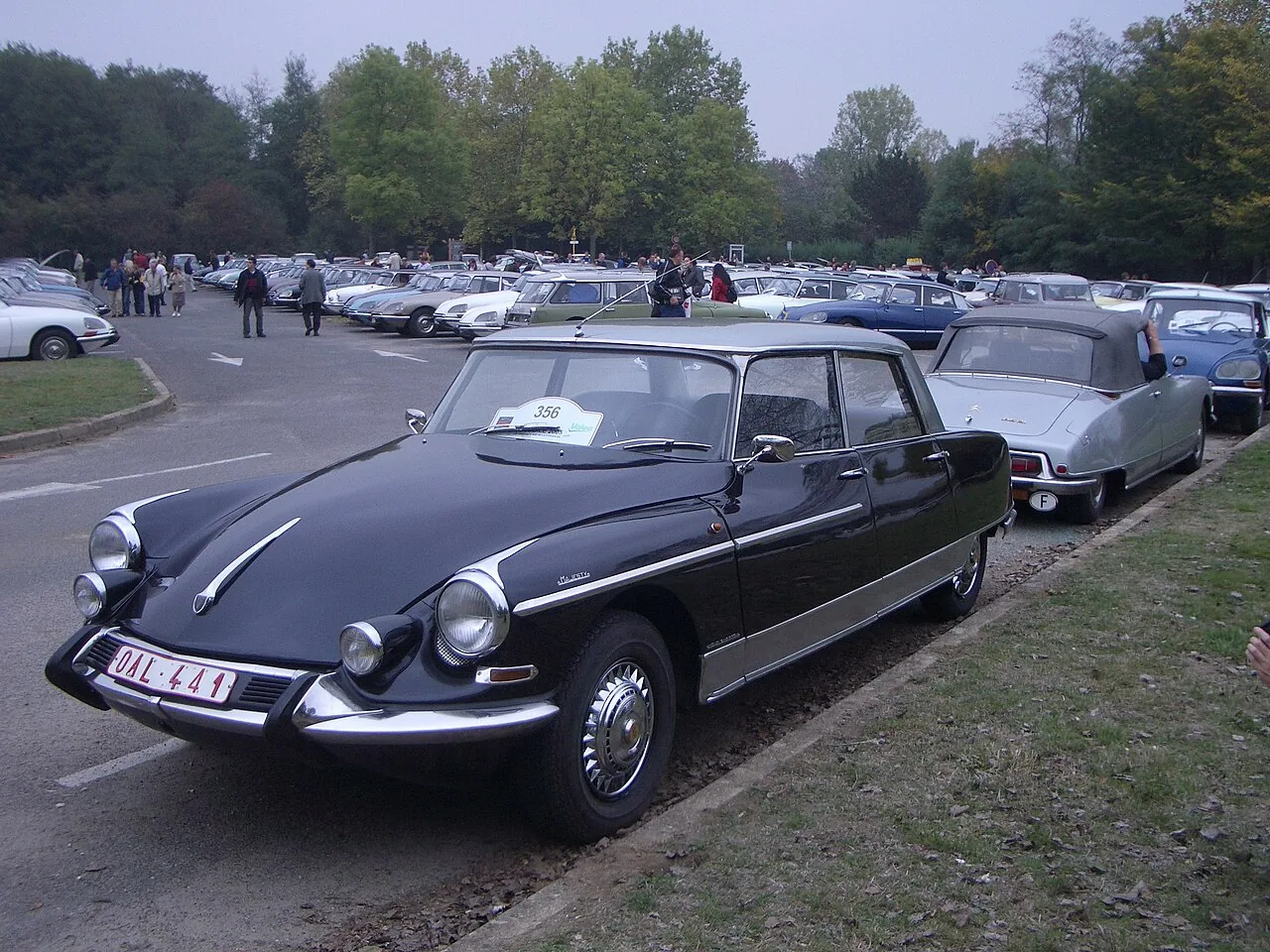
| Manufacturer | Citroën |
| Production years | 1955–1975 |
| Body styles | Fastback/sedan, wagon/estate, convertible |
| Drive layout | Front mid-engined, front-wheel drive |
| Generations / series | Single generation, three series |
| Total production | 1,455,746 units across six countries |
| Main production plant | Quai de Javel (now Quai André-Citroën), Paris |
| Key first | First mass-production car with hydropneumatic suspension and disc brakes |
| Companion model | Citroën ID (less expensive variant) |
| Series 3 introduction year | 1967 |
Origins and launch
The DS 19 was the product of 18 years of secret development intended to succeed the Traction Avant. It was publicly revealed on 6 October 1955 at the Paris Motor Show, where it generated an immediate and extraordinary response. Within the first 15 minutes of the show, 743 orders were placed, and by the close of the first day that figure had risen to 12,000.
Over the full ten days of the show, the DS accumulated 80,000 deposits, a record that stood for more than 60 years until the Tesla Model 3 received 180,000 first-day deposits in March 2016. Contemporary journalists described the DS as having pushed the envelope of what was then considered possible in the trade-off between ride quality and handling in a motor vehicle.
Who designed and engineered the DS?
The body of the DS was the work of Flaminio Bertoni, an Italian sculptor and industrial designer, while French aeronautical engineer André Lefèbvre was responsible for its engineering. The hydropneumatic self-levelling suspension system was developed in-house by Paul Magès. The combination of an aeronautical engineering perspective and a sculptor's sensibility produced a silhouette that the structuralist philosopher Roland Barthes, in an essay on the car, described as looking as if it had fallen from the sky.
The 1967 Series 3 facelift was the work of Robert Opron. That revision was also notable for introducing directional headlights to automotive mass-production, an innovation that had not previously appeared on a volume-production car.
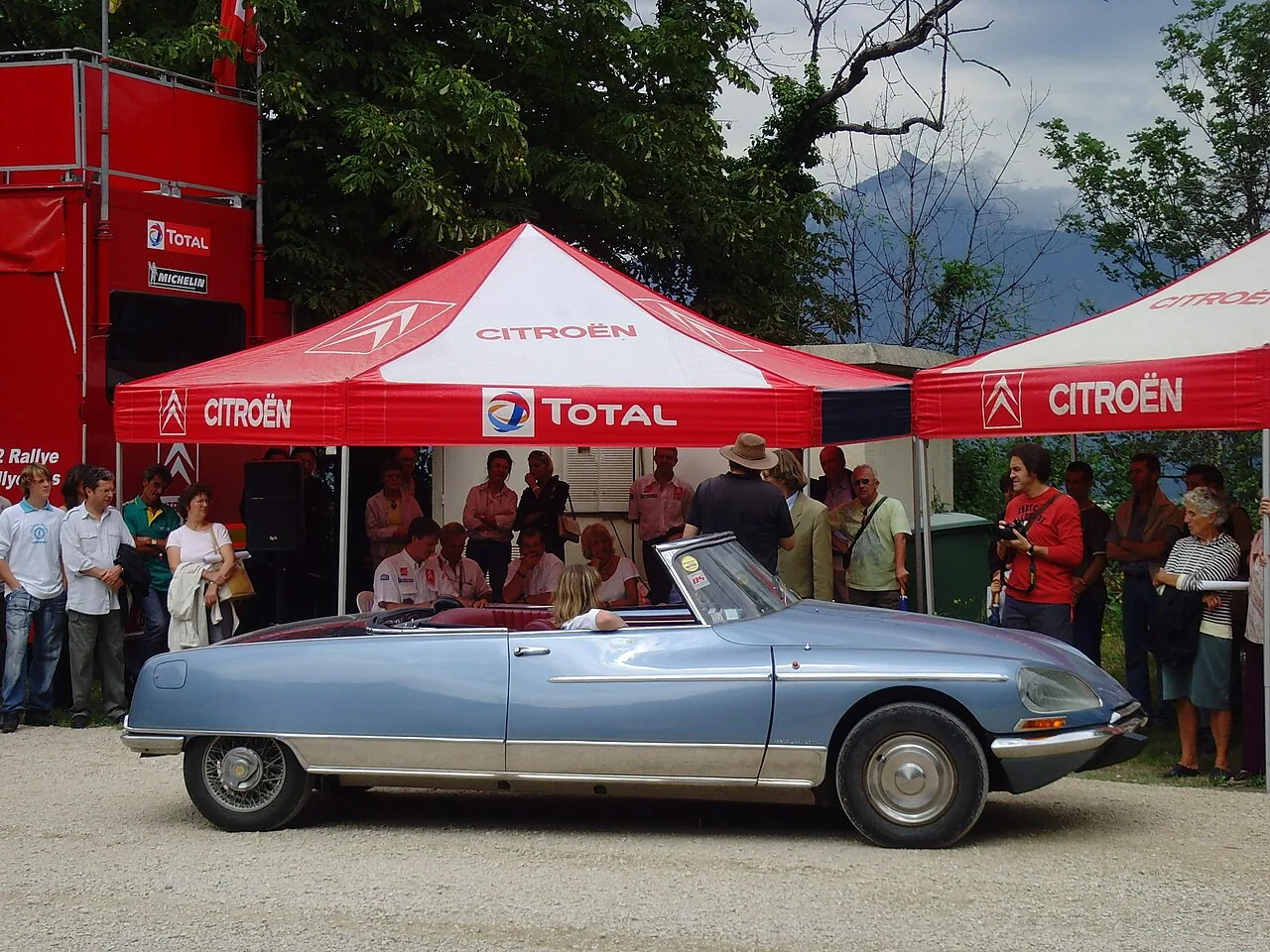
Hydropneumatic suspension and hydraulic systems
The DS used double wishbone suspension with L-shaped arms at the front and trailing arms at the rear, combined with entirely novel hydropneumatic spring and damper units developed by Paul Magès. The system provided automatic self-levelling and driver-adjustable ride height, characteristics that allowed the DS to travel quickly over the poor road surfaces then common in France.
In conventional cars, hydraulics were confined to brakes and power steering. In the DS, the hydraulic system was also employed for the suspension, the clutch, and the transmission, making it one of the most extensively hydraulic passenger cars yet produced. The semi-automatic transmission retained manual gear selection but replaced the mechanical linkage with a powered hydraulic shift mechanism, eliminating the need for a clutch pedal.
Disc brakes and wheel design
The DS was the first mass-produced car to field disc brakes successfully. Although disc brakes had been tested on a car as early as 1902 by the British Lanchester Motor Company, and volume production had been attempted in 1949 by American small-car manufacturer Crosley without lasting success, the DS achieved the first durable application of the technology in mass production. The front disc brakes were mounted inboard, which together with independent front suspension reduced unsprung weight.
At launch, the DS also featured innovative centerlock wheels fastened by a captive Allen bolt at the centre, with a hexagonal protrusion transferring drive to a matching recess in the wheel. This arrangement permitted very rapid wheel changes in the event of a puncture and proved advantageous in motor racing.
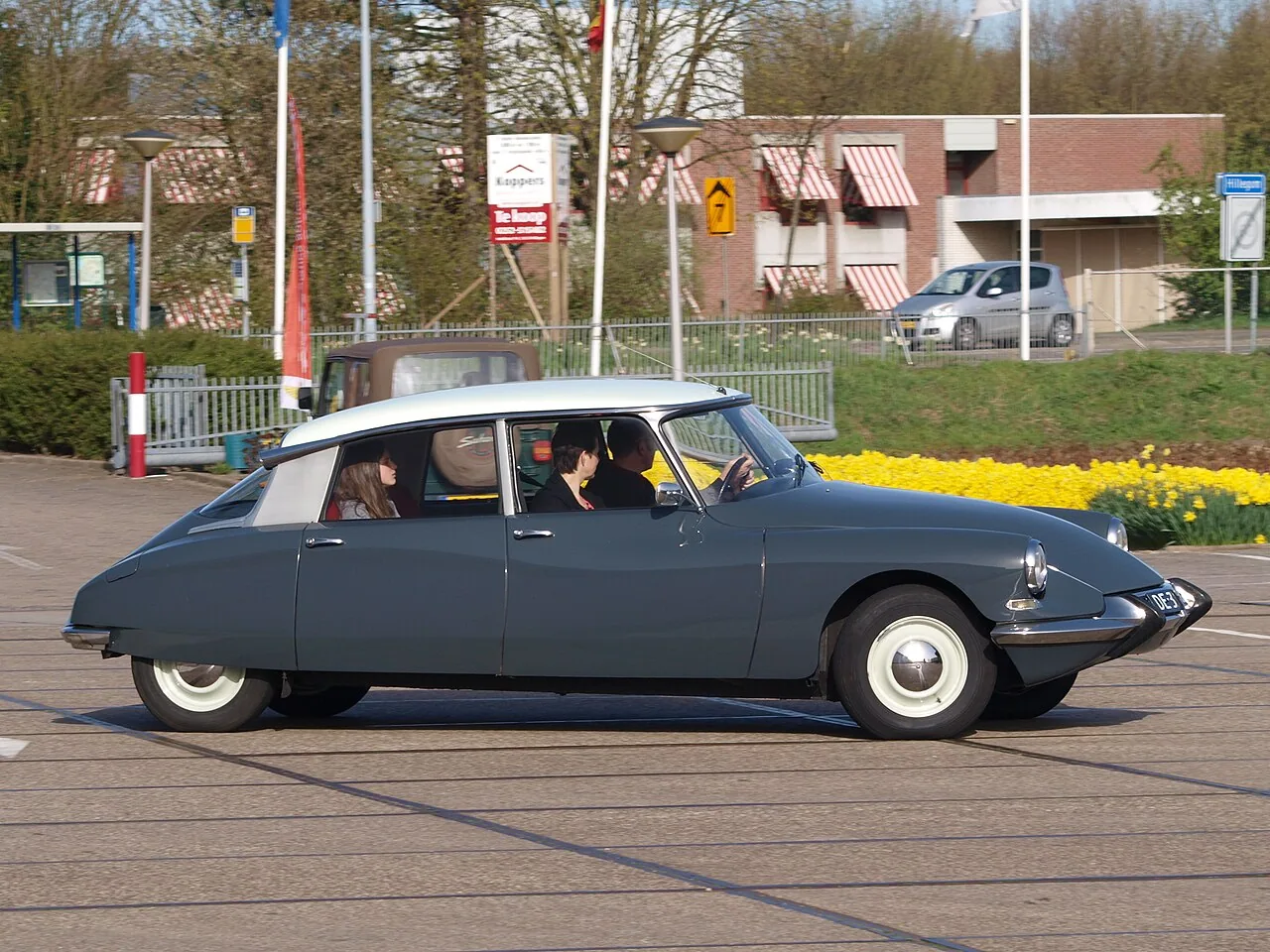
Tyres, engine, and design constraints
Because Citroën was owned by tyre manufacturer Michelin, the company had designed its cars around the radial tyre since 1948, and the DS continued that practice. The front and rear track widths were deliberately set at different dimensions to reduce the unequal tyre loading associated with understeer, a characteristic common in front-engined, front-wheel-drive cars.
French tax horsepower regulations, which effectively penalised larger engines, influenced the DS's powertrain. Unlike its Traction Avant predecessor, the DS was never offered with a top-of-range six-cylinder engine. Citroën had developed a prototype air-cooled flat-six engine for the car but lacked the funds to bring it to production. A fibreglass roof lowered the centre of gravity and reduced weight transfer. The DS also received power steering alongside its hydraulic transmission.
Motorsport record
The DS competed in rally racing for nearly its entire 20-year production life, achieving significant victories from 1959 to 1974. Its first major win came at the 1959 Monte Carlo Rally. In 1962, Pauli Toivonen drove a DS 19 to victory in the 1000 Lakes Rally. The DS won the Monte Carlo Rally again in 1966, though the event was attended by controversy when the competitive BMC Mini-Cooper team was disqualified for rule infractions.
Robert Neyret took consecutive victories in the Rallye du Maroc in 1969 and 1970 driving a DS 21. The DS remained competitive into the mid-1970s: in the demanding 1974 London–Sahara–Munich World Cup Rally, it finished ahead of more than 70 other entrants, only five of which completed the entire event.
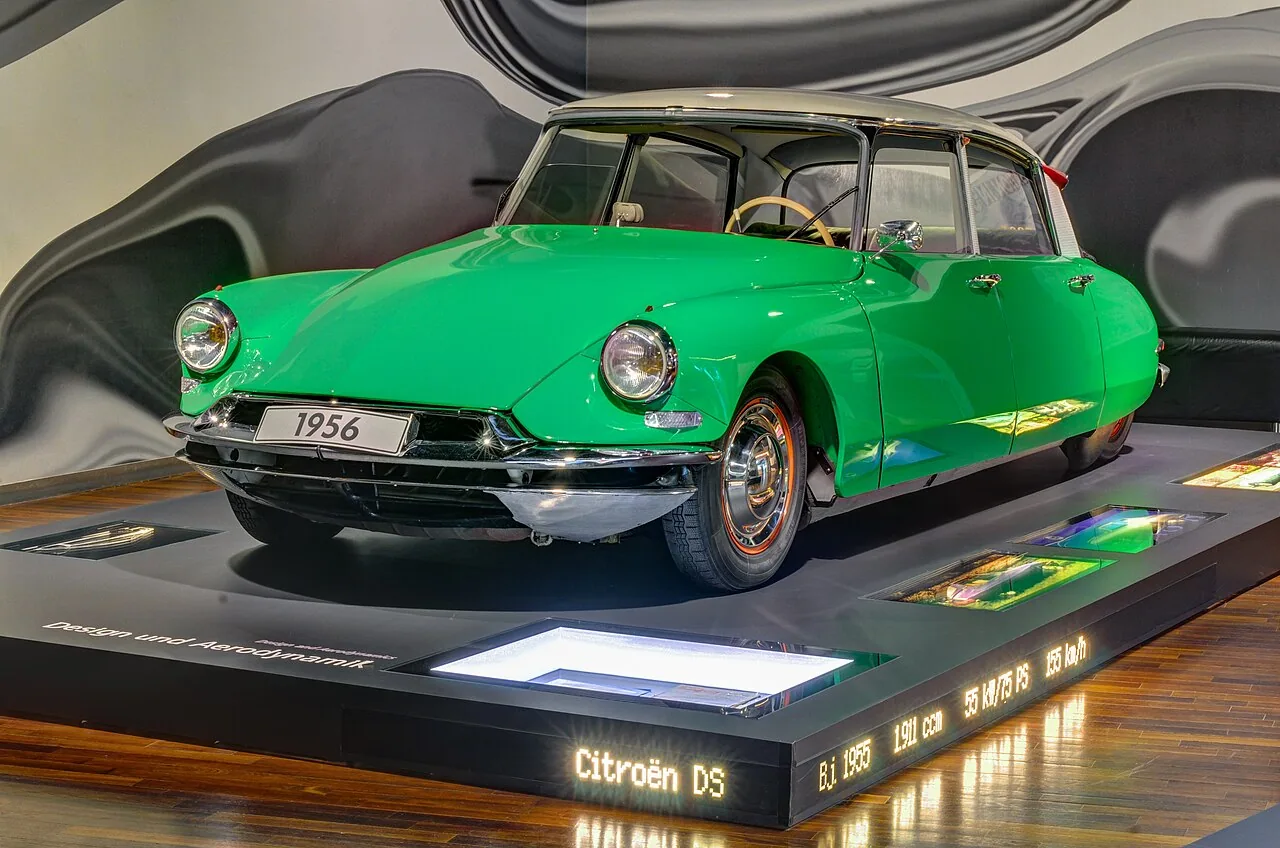
Reception and recognition
Classic and Sports Car magazine named the DS the most beautiful car of all time following a poll of 20 world-renowned car designers, among them Giorgetto Giugiaro, Ian Callum, Roy Axe, Paul Bracq, and Leonardo Fioravanti. Automobile Magazine placed it fifth on its 2005 list of the 100 Coolest Cars.
The DS was distributed across many territories worldwide and carried cultural significance beyond its mechanical achievements. During the Cold War it was seen as a statement of technological relevance in the Space Age. A less expensive companion model, the Citroën ID, was marketed in parallel throughout the production run to widen the range's accessibility.
Frequently asked questions
When was the Citroën DS introduced and how long was it produced?
The DS 19 was introduced on 6 October 1955 at the Paris Motor Show, following 18 years of secret development as the successor to the Traction Avant. Production continued until 1975, giving the model a 20-year production run across a single generation of three series.
What made the Citroën DS technically revolutionary?
The DS was the first mass-production car to combine hydropneumatic self-levelling suspension with disc brakes, both of which were novel in volume production at the time. Its hydraulic systems extended beyond brakes and steering to encompass the suspension, clutch, and transmission, while the 1967 Series 3 added directional headlights, another automotive mass-production first.
Who designed the Citroën DS body?
The DS body was designed by Flaminio Bertoni, an Italian sculptor and industrial designer. The engineering was led by French aeronautical engineer André Lefèbvre, and the hydropneumatic suspension was developed by Paul Magès. The 1967 Series 3 facelift was the work of Robert Opron.
How many Citroën DS cars were built?
Citroën built a total of 1,455,746 DS examples across six countries. Of that total, 1,330,755 were manufactured at Citroën's main Paris plant on the Quai de Javel, now named the Quai André-Citroën.
What rallying victories did the Citroën DS achieve?
The DS won the Monte Carlo Rally in 1959 and again in 1966, the latter amid controversy over the disqualification of the BMC Mini-Cooper team. Pauli Toivonen won the 1962 1000 Lakes Rally in a DS 19, Robert Neyret won the Rallye du Maroc in both 1969 and 1970 in a DS 21, and the model remained competitive as late as the 1974 London–Sahara–Munich World Cup Rally.
What is the meaning of the names DS and ID?
Both names are puns in French. DS is pronounced identically to déesse, the French word for 'goddess', while ID is pronounced as idée, meaning 'idea'.
Why did the DS never get a six-cylinder engine?
Citroën developed a prototype air-cooled flat-six engine intended for the DS but lacked the financial resources to put it into production. French tax horsepower regulations also discouraged larger engines by effectively penalising them, meaning the DS never offered the kind of top-of-range six-cylinder option that its predecessor, the Traction Avant, had carried.
How was the DS received at its Paris Motor Show debut?
The response was exceptional: 743 orders were placed within the first 15 minutes, 12,000 by the end of the first day, and 80,000 deposits over the ten days of the show. That deposit record stood for more than 60 years before it was surpassed by the Tesla Model 3 in March 2016.
Sources
- Wikipedia: Citroën DS — Factual basis of this entry