Volkswagen
Volkswagen, commonly abbreviated to VW, is a German automobile brand headquartered in Wolfsburg, Lower Saxony, Germany. The company was established on 28 May 1937 by the German Labour Front, the national labour organisation of the Nazi Party, as part of the Strength Through Joy (Kraft durch Freude) programme. Its name derives from the German words Volk ('people') and Wagen ('wagon'), giving the literal meaning 'people's car'.
As of 2025, Volkswagen carried a market capitalisation of approximately US$58.9 billion, reflecting its growth from a state-sponsored wartime project into a globally recognised automotive brand.
| Full name | Volkswagenwerk GmbH (from 16 September 1938) |
| Common abbreviation | VW |
| Founded | 28 May 1937, Berlin |
| Founded by | German Labour Front (Deutsche Arbeitsfront), Nazi Party |
| Headquarters | Wolfsburg, Lower Saxony, Germany |
| Market capitalisation (2025) | approx. US$58.9 billion |
| Original programme | Strength Through Joy (Kraft durch Freude, KdF) |
| First factory location | Stadt des KdF-Wagens (now Wolfsburg), construction began May 1938 |
| Wartime military models | Type 82 Kübelwagen; Type 166 Schwimmwagen |
| Postwar revival | British Army officer Ivan Hirst |
What does the Volkswagen name mean?
The word Volkswagen is a compound of two German nouns: Volk, meaning 'people' or 'folk', and Wagen, meaning 'wagon' or 'car'. The resulting phrase translates most directly as 'people's car', or in older English idiom, 'folk's wain'. The name was not invented in isolation; the prefix Volks had already been applied broadly in Germany to consumer goods intended for mass use, such as the Volksempfänger radio receiver.
The choice of name reflected the political ambition behind the project: to produce an affordable motor car accessible to ordinary German families rather than to the wealthy minority who could already afford to drive.
Origins of the people's car concept
By the early 1930s, car ownership in Germany was deeply unequal. Only one in fifty Germans owned a car, and the majority of the population could afford nothing more mechanised than a motorcycle. Several manufacturers had independently begun developing low-cost vehicles in response to this gap, including the Mercedes 170H, the BMW 3/15, the Adler AutoBahn, the Steyr 55 and the Hanomag 1.3-litre model.
The concept had deeper roots still. The pioneering automotive engineer Béla Barényi is credited with conceiving a basic small-car design as early as the mid-1920s. Josef Ganz went further, developing the Standard Superior and explicitly marketing it as the 'German Volkswagen'. In Germany, Hanomag had already mass-produced the rear-engined 2/10 PS Kommissbrot between 1925 and 1928, and in Czechoslovakia, Hans Ledwinka's Tatra T77 was becoming progressively smaller and more affordable.
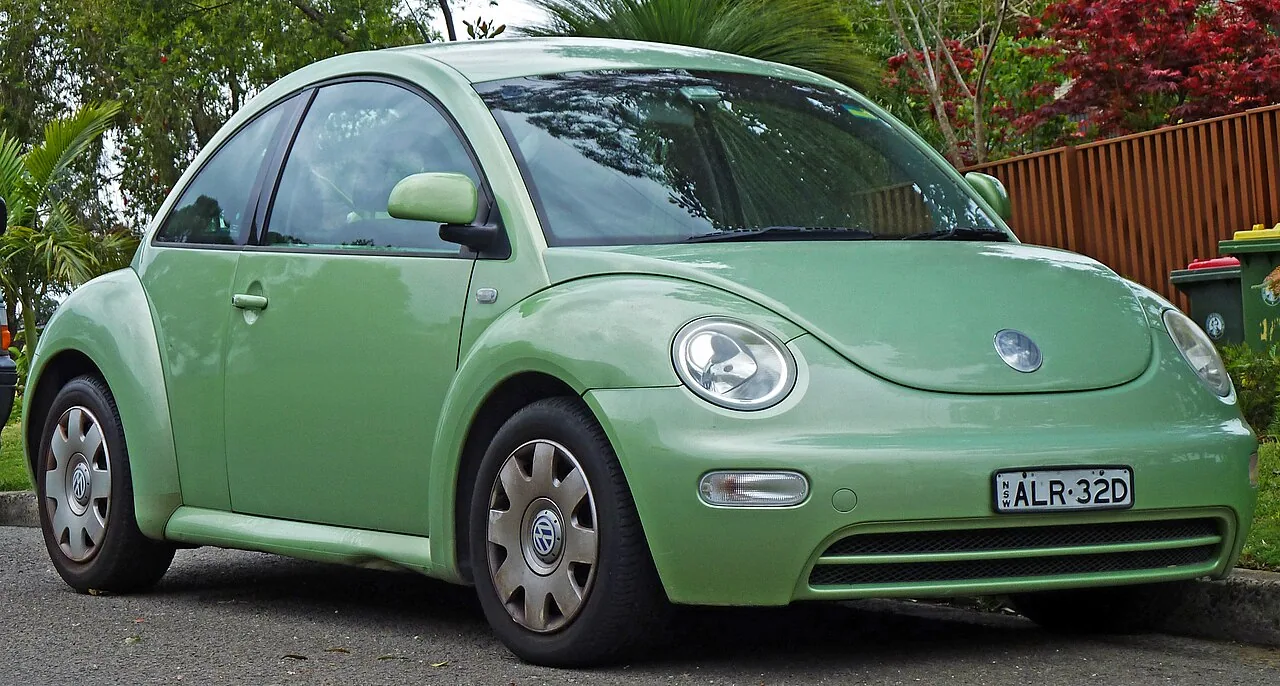
Ferdinand Porsche, a designer with a background in high-end vehicles and racing cars, had for years been attempting to interest manufacturers in a small family car. In 1933 he assembled a vehicle he called the Volksauto, incorporating an air-cooled rear engine, torsion bar suspension and a rounded 'beetle' body shape, the front bonnet being rounded to improve aerodynamic efficiency given the car's modest engine output.
Who established Volkswagen and why?
In 1934 Adolf Hitler intervened directly in the various people's car projects, issuing a specification for a basic vehicle capable of carrying two adults and three children at 100 km/h (62 mph). The target retail price was 990 Reichsmarks — roughly the cost of a small motorcycle at a time when average weekly wages stood at around 32 Reichsmarks — and Hitler envisaged a savings scheme enabling ordinary families to accumulate the purchase price gradually.
Private industry concluded that it could not manufacture a car at that price without losing money, so Hitler chose to fund an entirely new, state-owned factory built to Ferdinand Porsche's design. The savings scheme, summed up in the slogan 'Fünf Mark die Woche musst du sparen, willst du im eigenen Wagen fahren' ('You need to set aside five marks a week, if you want to drive in your own car'), eventually attracted around 336,000 participants. The venture was not commercially viable and depended entirely on government support to continue.
The formal corporate entity was registered on 28 May 1937 under the name Gesellschaft zur Vorbereitung des Deutschen Volkswagens mbH, abbreviated to Gezuvor. It was established in Berlin by the German Labour Front and renamed Volkswagenwerk GmbH on 16 September 1938.
How was the original car designed and tested?
The body of the prototype was developed by Erwin Komenda, the longstanding Auto Union chief designer and a member of Ferdinand Porsche's personally chosen team. The resulting shape was recognisably the form later known worldwide as the Beetle. It was among the first cars designed with the assistance of a wind tunnel, a technique that had been used in German aircraft design since the early 1920s.
Before the design was declared complete, the prototypes accumulated a record 1.6 million kilometres (approximately one million miles) of testing. The production car featured an air-cooled, flat-four, rear-mounted engine — the air-cooling specified at Hitler's insistence to prevent freezing — along with the distinctive rounded bodywork that had been a feature of Porsche's original Volksauto concept.
Where and when was the factory built?
Construction of the purpose-built production facility began in May 1938 in a newly established town called Stadt des KdF-Wagens, which was laid out specifically to house the factory's workforce. That town is today known as Wolfsburg, which remains the headquarters of Volkswagen. The first prototypes — designated KdF-Wagen, after the Kraft durch Freude programme — appeared publicly in 1938, and the earliest cars had been produced in Stuttgart.
By the time Germany entered the Second World War in 1939, the factory had produced only a handful of cars. None of the approximately 336,000 people who had paid into the savings scheme ever received a vehicle. A legal action filed in 1950 eventually resulted, after twelve years of proceedings, in a settlement offering participants either a credit of 12 per cent off the list price of a new base-model VW or approximately 20 per cent of the value they had originally deposited.
Wartime production, 1939–1944
The outbreak of war in 1939 redirected the factory's output entirely towards military requirements. The principal wartime products were the Type 82, known as the Kübelwagen ('bucket car'), a utility vehicle that became Volkswagen's most commonly produced wartime model, and the Type 166 Schwimmwagen ('swim car'), an amphibious vehicle that became the most-produced amphibious car in history.
Wartime production also brought the factory into direct connection with the forced labour system of the Nazi state, with concentration camp labour used in manufacturing. Among the notable incidental details of the period, American war correspondent Ernie Pyle was one of the first foreigners to drive a Volkswagen, having use of a captured vehicle for a short time following the Allied victory in Tunisia. The sole civilian car delivered during the entire war was a Type 1 Cabriolet presented to Adolf Hitler on 20 April 1944, his 55th birthday.
Postwar revival
After the end of the Second World War the company was revived under the direction of British Army officer Ivan Hirst, whose intervention was instrumental in restarting production and establishing Volkswagen as a going concern in the postwar period. From these circumstances the brand developed into a global automobile manufacturer.
The legal aftermath of the prewar savings scheme was not resolved until after Hirst's revival of the company. The lawsuit initiated in 1950 took twelve years to conclude, ultimately providing a modest financial settlement to those who had paid into the scheme but never received a car.
Frequently asked questions
When was Volkswagen founded?
Volkswagen was formally established on 28 May 1937 in Berlin by the German Labour Front, the national labour organisation of the Nazi Party, under the name Gesellschaft zur Vorbereitung des Deutschen Volkswagens mbH. It was renamed Volkswagenwerk GmbH on 16 September 1938. The company was created as part of the Nazi Strength Through Joy (Kraft durch Freude) programme.
What does Volkswagen mean in English?
Volkswagen is formed from two German words: Volk ('people' or 'folk') and Wagen ('wagon' or 'car'). The name translates into English as 'people's car', or in older phrasing, 'folk's wain'. It reflects the original intention to produce a car affordable to ordinary German families.
Who designed the original Volkswagen Beetle?
Ferdinand Porsche developed the core mechanical concept, including the air-cooled rear engine and torsion bar suspension, assembling a prototype he called the Volksauto in 1933. Erwin Komenda, the longstanding Auto Union chief designer and a member of Porsche's team, developed the body of the prototype, producing the rounded shape that became recognisable as the Beetle. Wind tunnel testing, a technique borrowed from German aircraft design, was used in refining the bodywork.
Did anyone who paid into the original VW savings scheme receive a car?
None of the approximately 336,000 people who contributed to the prewar savings scheme ever received a car; the outbreak of war in 1939 ended civilian production before deliveries could begin. A lawsuit brought in 1950 took twelve years to resolve and resulted in a settlement providing participants with either a 12 per cent credit off the list price of a new base-model VW or roughly 20 per cent of the value originally paid in.
What vehicles did Volkswagen produce during World War II?
Wartime output focused on two military vehicles: the Type 82 Kübelwagen, a utility car that was VW's most common wartime model, and the Type 166 Schwimmwagen, an amphibious vehicle that became the most-produced amphibious car in history. The factory also made use of concentration camp labour during this period. The only civilian car delivered during the entire war was a Type 1 Cabriolet given to Adolf Hitler on his 55th birthday, 20 April 1944.
Where is Volkswagen headquartered?
Volkswagen is based in Wolfsburg, Lower Saxony, Germany. The city was purpose-built to house the workers of the new VW factory, originally called Stadt des KdF-Wagens, with factory construction beginning in May 1938. It was renamed Wolfsburg and remains the company's headquarters today.
Who revived Volkswagen after World War II?
British Army officer Ivan Hirst was responsible for reviving Volkswagen after the Second World War. His intervention restarted production at the Wolfsburg factory and was central to establishing the brand as a functioning enterprise in the postwar period. From this basis the company grew into a global automobile manufacturer.
What was Volkswagen's market capitalisation in 2025?
As of 2025, Volkswagen had a market capitalisation of approximately US$58.9 billion. This figure reflects the scale of the company's growth from its origins as a state-sponsored project in the late 1930s into one of the world's major automobile brands.
Sources
- Wikipedia: Volkswagen — Factual basis of this entry