Ferrari
Ferrari S.p.A. is an Italian luxury sports car manufacturer headquartered in Maranello, Italy. The company was founded by Enzo Ferrari in 1939 and has operated under its current name since 1945, producing road cars since 1947. Its reputation rests on a combination of motorsport achievement, particularly in Formula One, and a range of high-performance road cars that has grown to include supercars, grand tourers, and one SUV.
Scuderia Ferrari, the company's racing division, has competed since 1929 and is the oldest and most successful constructor in Formula One history, a distinction that underpins Ferrari's global brand identity.
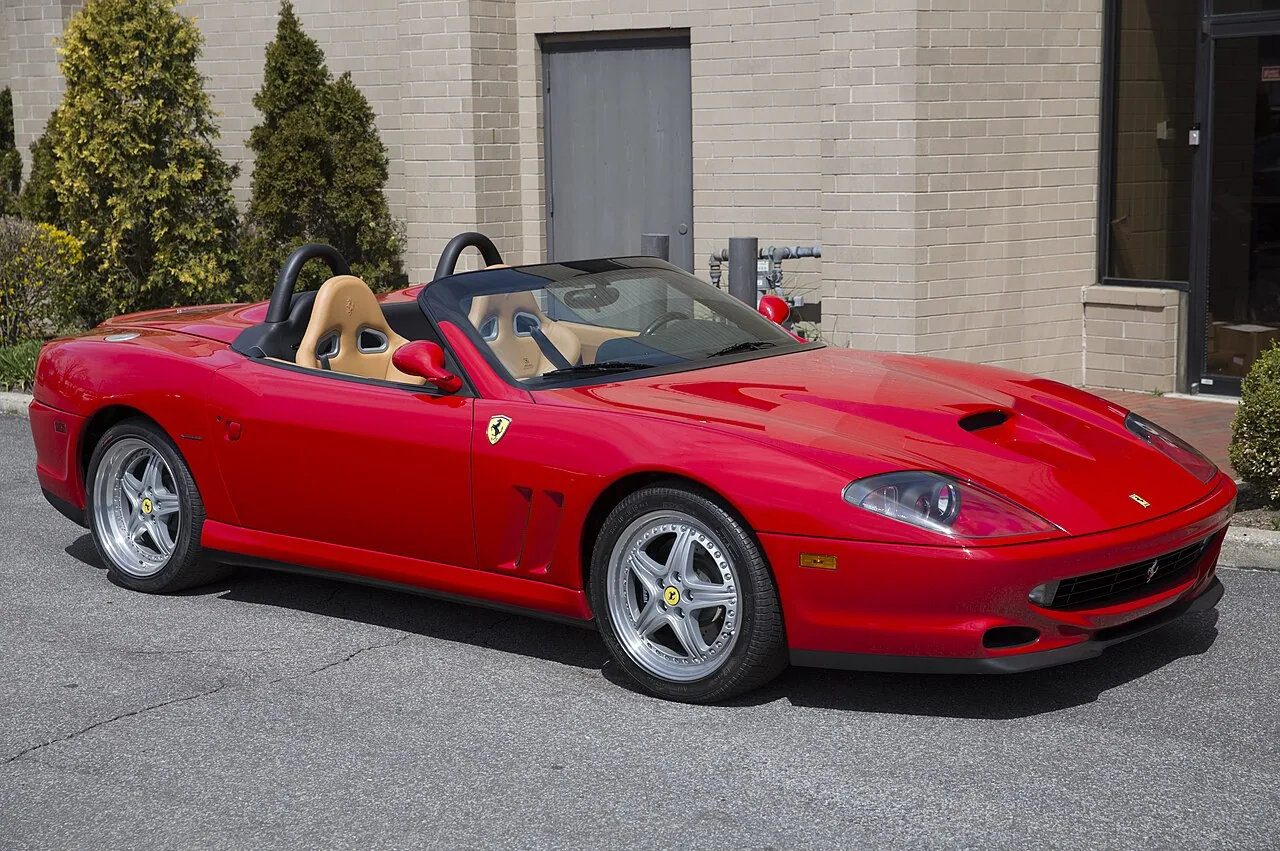
| Type | Luxury sports car manufacturer |
| Founded | 1939 |
| Founder | Enzo Ferrari (1898–1988) |
| Headquarters | Maranello, Italy |
| First road car | Ferrari 125 S (1947) |
| Public company since | 1960 |
| Fiat subsidiary | 1963–2014 |
| Spun off from Fiat Chrysler Automobiles | 2016 |
| Market capitalisation (May 2023) | approximately US$85.5 billion |
| Racing division | Scuderia Ferrari (active since 1929) |
Who founded Ferrari and how did the company begin?
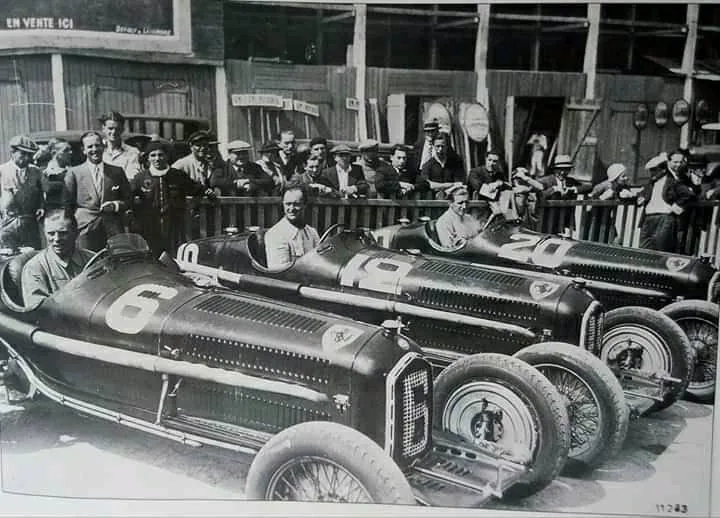
Enzo Ferrari had worked as a salesman and racing driver for Alfa Romeo before establishing Scuderia Ferrari as a racing team in 1929. Initially intended to support gentleman drivers and amateur racers, the team became Alfa Romeo's unofficial racing representative following the manufacturer's withdrawal from competition in 1933, drawing on Enzo's close connections within the company. Through the mid-1930s, Scuderia Ferrari attracted some of the leading drivers of the era and accumulated a considerable number of race victories before the team was liquidated and reabsorbed into Alfa Romeo in 1937.
Enzo departed Alfa Romeo in 1939 following disagreements with senior management, using his financial settlement to establish a new company he called Auto Avio Costruzioni. The business was housed in the former Scuderia Ferrari premises, but a non-compete agreement prevented him from using the Ferrari name for four years. The company produced a single car, the Auto Avio Costruzioni 815, which entered one race before the outbreak of the Second World War brought competition to a halt.
Wartime operations and the move to Maranello
During the war years, Enzo Ferrari's company pivoted to manufacturing aircraft engines and machine tools for the Italian military. These contracts proved financially rewarding and provided the nascent organisation with substantial capital for future development.
In 1943, the threat of Allied bombing raids prompted the company to relocate its factory from its original site to Maranello. The new facility was bombed twice despite the move, yet Ferrari has remained based in Maranello ever since.
The founding of the Ferrari marque and early motorsport success
The company adopted the Ferrari name in 1945, and engineers immediately began work on a new V12 engine intended to power the 125 S, the first car to bear the Ferrari name and the basis for many subsequent models. The 125 S began racing in 1947 and recorded multiple victories during that first season alone.
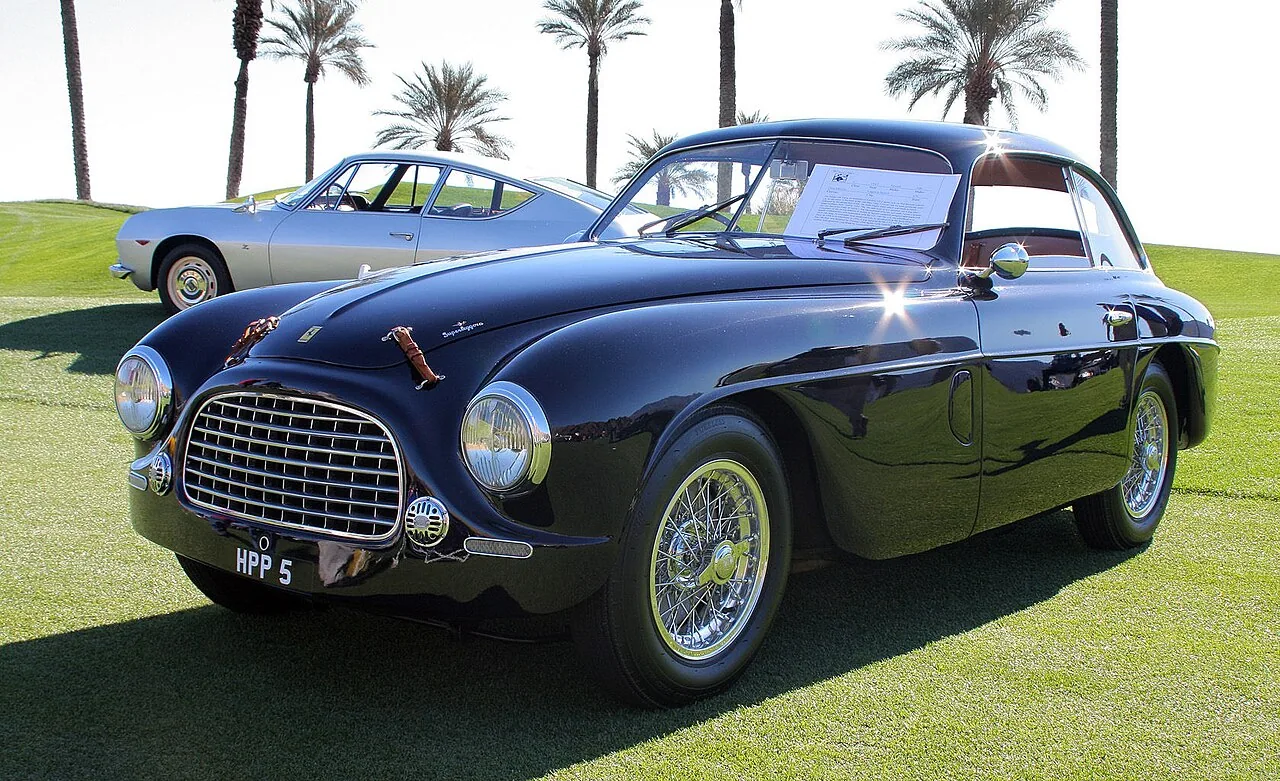
Early international successes reinforced the marque's prestige: the 1949 24 Hours of Le Mans and the 1951 Carrera Panamericana were among the wins that established Ferrari as a serious automaker of the highest order. By the early 1950s, Ferrari's road cars had already become favourites of the international elite, and the company developed interconnected families of cars including the America, Monza, and 250 series. The 250 GT Coupé, which entered production in 1958, was Ferrari's first series-produced road car.
Corporate restructuring and the shift to mid-engined design
Ferrari was reorganised as a public company in 1960 and subsequently sought a manufacturing partner. Negotiations with Ford were opened in 1963 but ultimately failed; talks with Fiat proved more productive, and in 1969 Fiat acquired a 50 percent stake in Ferrari. Fiat's ownership deepened over time, and from 1963 to 2014 Ferrari operated as a Fiat subsidiary.
The late 1960s brought two models that represented a significant departure from Ferrari's established formula. The 1967 Dino 206 GT was the company's first mass-produced mid-engined road car, breaking with the longstanding practice of fitting every Ferrari road car with a front-mounted V12. The 1968 365 GTB/4 introduced a more streamlined visual language that modernised Ferrari's aesthetic. The Dino in particular pointed toward a wholesale adoption of mid-engine layouts alongside V6 and V8 powertrains in the 1970s and 1980s.
The Enzo Ferrari era concludes and the transition of ownership
Enzo Ferrari died in 1988, at which point Fiat expanded its shareholding in the company to 90 percent. The last car he personally approved, the F40, built on the flagship supercar concept first explored with the 288 GTO four years earlier.
Luca di Montezemolo succeeded Enzo as chairman in 1991 and held the role for 23 years. During his tenure, the profitability of Ferrari's road car business increased nearly tenfold, achieved by both broadening the product range and deliberately capping total production volumes. Montezemolo also oversaw a significant expansion of licensing agreements, served as chairman of Fiat proper between 2004 and 2010, and presided over a dramatic improvement in Formula One performance, partly through the appointments of Michael Schumacher and Jean Todt.
Flagship cars and the supercar lineage
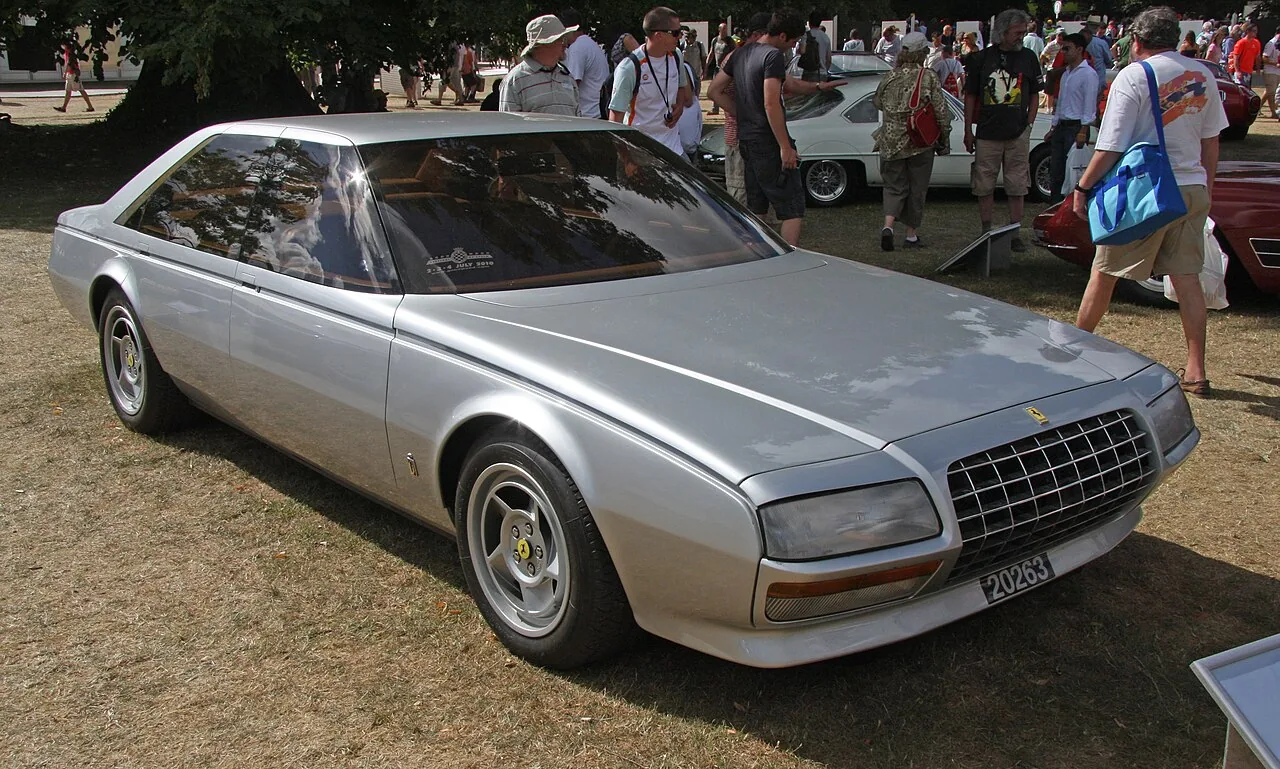
Ferrari's tradition of building a definitive halo model began with the 288 GTO in 1984. The F40, approved by Enzo Ferrari himself before his death in 1988, extended that philosophy. Under Montezemolo's chairmanship three further flagship cars followed: the F50, the Enzo, and the LaFerrari.
Many of Ferrari's earlier cars from the 1950s and 1960s have achieved extraordinary results at auction, ranking among the most expensive motor cars ever sold.
Separation from Fiat Chrysler Automobiles and public ownership
Ferrari had been a subsidiary of Fiat S.p.A. from 1963 until 2014. Following Fiat's merger with Chrysler to form Fiat Chrysler Automobiles, Ferrari was spun off from that entity as a separate public company in 2016. Significant ownership of the publicly traded company is held by Piero Ferrari and by the investment holding company Exor N.V.
As of May 2023, Ferrari's market capitalisation stood at approximately US$85.5 billion, placing it among the largest car manufacturers in the world by that measure.
Scuderia Ferrari and motorsport heritage
Scuderia Ferrari has competed continuously since 1929, initially in Grand Prix racing and subsequently in Formula One since the championship's inception. It is recognised as the longest-running and most successful constructor in Formula One history, holding numerous records within the series.
Beyond Formula One, Ferrari was historically active in sports car racing from 1947 onward. Its cars accumulated victories in prominent events including the Mille Miglia, the Targa Florio, and the 24 Hours of Le Mans, and the company achieved several overall victories in the World Sportscar Championship. The passionate following that Scuderia Ferrari has built over decades is commonly referred to as the tifosi.
Brand identity and current product range
Ferrari is considered one of the world's strongest brands, projecting an image centred on racing heritage, luxury, and deliberate exclusivity. The strategy of limiting production volumes, introduced systematically under Montezemolo, has been a consistent element of that positioning.
The company's current model range spans supercars, grand tourers, and one SUV. For current pricing and model availability, the official Ferrari website should be consulted directly.
Frequently asked questions
When was Ferrari founded and by whom?
Ferrari was founded in 1939 by Enzo Ferrari, who was born in 1898 and died in 1988. The company adopted the Ferrari name in 1945, two years before it began producing road cars. Prior to founding his own company, Enzo Ferrari had worked as a salesman and racing driver for Alfa Romeo.
Where is Ferrari headquartered?
Ferrari is headquartered in Maranello, Italy, where it has been based since 1943. The factory was relocated there under the threat of Allied bombing raids during the Second World War and was itself bombed twice after the move. Ferrari has remained in Maranello continuously since that time.
What was Ferrari's first car?
The first car to carry the Ferrari name was the 125 S, powered by a V12 engine developed after the company adopted its current name in 1945. It began racing in 1947 and won multiple events during that season. Before the Ferrari name was established, the company had produced the Auto Avio Costruzioni 815 in 1940, which competed in one race before the war ended competition.
How is Ferrari connected to Fiat?
Fiat acquired a 50 percent stake in Ferrari in 1969, and Ferrari operated as a Fiat subsidiary from 1963 to 2014. When Enzo Ferrari died in 1988, Fiat expanded its shareholding to 90 percent. Ferrari was eventually spun off from Fiat's successor company, Fiat Chrysler Automobiles, in 2016 and operates today as an independent publicly traded entity.
What is Scuderia Ferrari and when did it start racing?
Scuderia Ferrari is Ferrari's racing division and has been competing since 1929, initially in Grand Prix events and later in Formula One. It is the oldest and most successful constructor in Formula One history. The team's devoted fan base is widely known as the tifosi.
What was significant about the Dino 206 GT?
Introduced in 1967, the Dino 206 GT was Ferrari's first mass-produced mid-engined road car. This represented a major shift away from the company's established engineering tradition, in which all road-going Ferraris used a front-mounted V12 engine. The Dino foreshadowed Ferrari's broader adoption of mid-engine layouts and smaller V6 and V8 engines during the 1970s and 1980s.
Who led Ferrari after Enzo Ferrari's death?
Luca di Montezemolo became chairman in 1991 and held the position for 23 years. During that period he increased road car profitability nearly tenfold, oversaw a major improvement in Formula One results through the appointments of Michael Schumacher and Jean Todt, expanded licensing activity, and supervised the production of the F50, the Enzo, and the LaFerrari flagship cars. He also served as chairman of Fiat proper from 2004 to 2010.
What is Ferrari's market capitalisation?
As of May 2023, Ferrari's market capitalisation was approximately US$85.5 billion, placing it among the largest car manufacturers in the world by that measure. The company is publicly traded, with notable shareholdings held by Piero Ferrari and the investment holding company Exor N.V.
Sources
- Wikipedia: Ferrari — Factual basis of this entry